

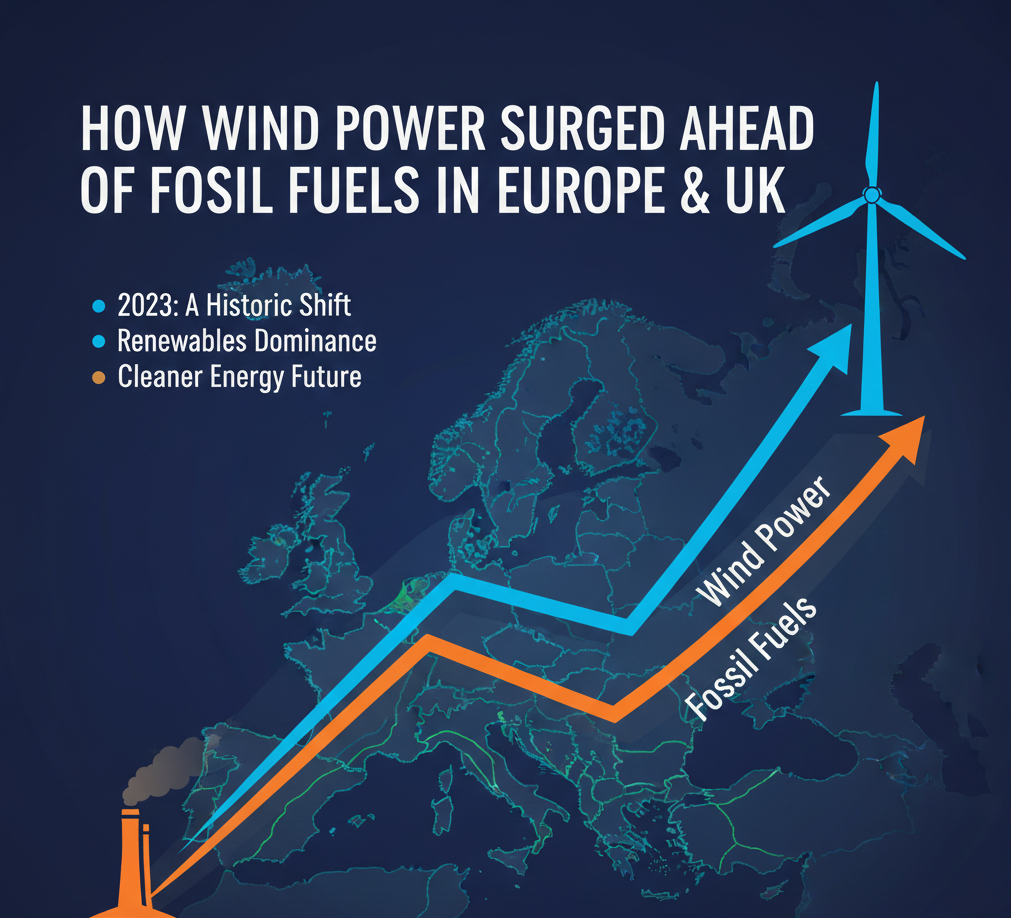
Power generation Wind power has become a dominant source of electricity in Europe and UK and it has surpassed fossil fuels in the power generation mix. The latest energy statistics indicate that between 20 and 22 percent of the total electricity was produced by wind, whereas fossil fuels, including coal and gas, were lower than this value in a number of countries. This change is a historic milestone of the clean energy transition in Europe.
UK Records wind power production.
The United Kingdom registered the maximum output in wind power in its history as during the peak periods, wind contributed to over 30 percent of the total electricity production. The offshore wind farms had an immensely significant role to play as it generated almost two-thirds of the total wind power as a result of the high wind speed and increased offshore capacity of the North Sea.
Decline in Coal and Gas Usage
Generation of power by coal also resumed its rapid fall, to below 5% of the aggregate power generation in the UK, and gas consumption decreased by more than 15% per annum in the key European economies. Increased prices of carbon, increasing fuel prices, and emerging tougher emission standards have rendered fossil fuels more uncompetitive than renewable.
Capacity Developments fuel Renewable Development.
Europe has installed wind capacity of over 18 GW in just one year, including over 4 GW of offshore wind developments. Germany, UK, Spain and the Netherlands were the forefront countries in the expansion. The efficiency of turbines was improved and the project approvals were accelerated to quicken deployment.
The benefits of energy security and cost are significant to the United States and its allies. The United States and its allies are interested in the basic benefits of energy security and cost.
Wind energy also contributed to Europe becoming less reliant on imported fossil fuels, decreasing the gas imports by about to 20 to 25 billion every year. Wind energy was also one of the cheapest sources of new electricity as levelized costs were much lower compared to gas-generated generation when fuel prices are high.
Policy Support and Climate Targets: This will provide a clearer insight into how the company can execute climate strategies while simultaneously supporting its policy objectives .Policy Support and Climate Targets
Policy Support and Climate Targets: It will give a better understanding of how the company will implement climate strategies and are capable of supporting its policy goals at the same time.
Good policy support such as the EU climate targets of 2030 and national renewable energy targets were essential. Governments auctioned more, and prolonged offshore lease periods, and invested greatly in grid upgrades to enable higher renewable withstand.
There are still difficulties despite the improvements.
Challenges still exist in spite of the surge. The grid congestion, allowances of delays and bottlenecks in the supply chain remain slowing down the execution of the project. According to the experts, to reach the climate and energy security targets of Europe, the annual wind additions should increase two times by 2030.
Outlook: Wind as the Backbone of Europe Power system.
Analysts believe that wind power will continue to be the foundation of the electricity systems of Europe and the UK with an overall installed capacity that is expected to reach more than 350 GW by 2030. Together with solar and energy storage, wind will even further push fossil fuels out of the market and stabilize power prices.
