

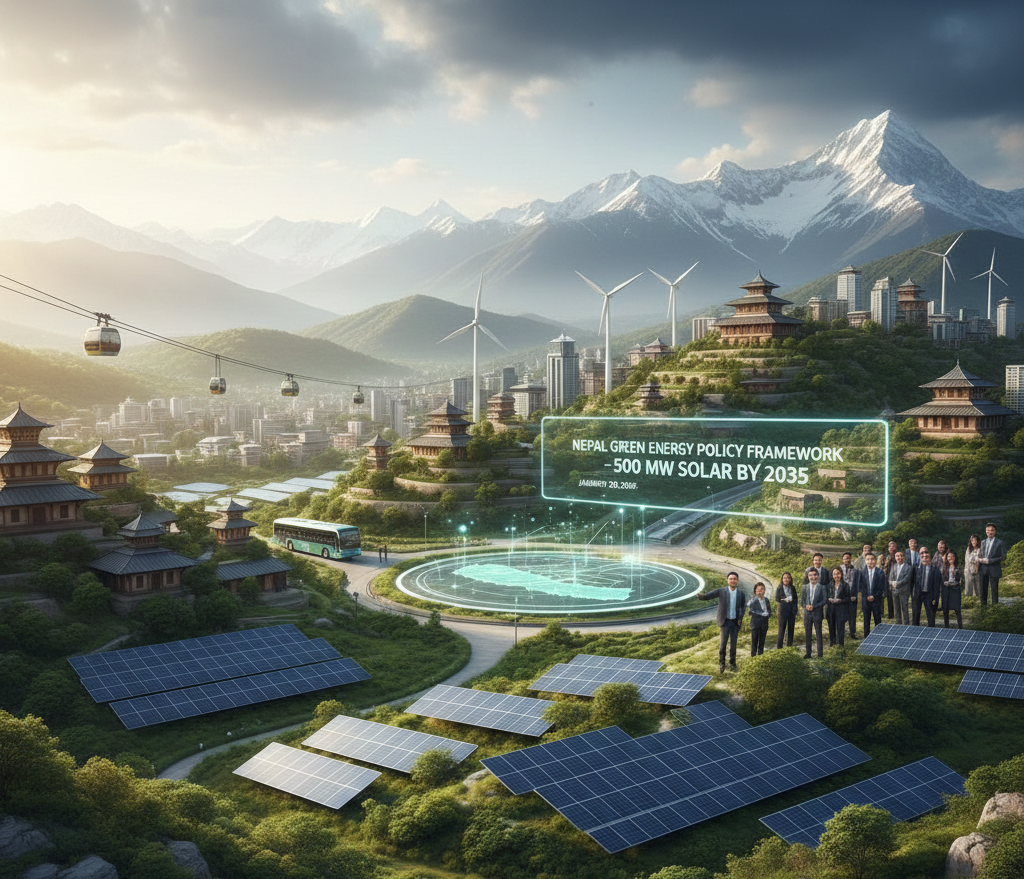
Nepal will launch a new framework of the so-called Green Energy Policy that should expedite the shift of the country to low-carbon and sustainable energy sources. The framework lays a lot of emphasis on solar power development and the country aims to have a target of installing a total of 500 megawatts (MW) of solar power by the year 2035. This initiative is in line with the overall climate obligations of Nepal and its ambition to lessen its reliance on fossil fuel imports and maintain energy security in the long run.
Hydropower should be accompanied with solar power to supplement the energy source.
Although Nepal has historically been characterized by its huge hydropower supply, the policymakers are beginning to realize that energy needs to be diversified. The occurrence of season and climatic risks that influence the production of hydropower has rendered the use of solar energy as a supplementary one. The new system will encourage solar projects in the following set up: grid-connected systems, rooftop systems and off-grid rural electrification especially in remote and mountainous areas.
Investment, Incentives, and role of the Private Sector.
The proposed policy framework will bring in the introduction of investment friendly policies comprising of fiscal incentives, streamlined approval procedures and the model of public-private partnership (PPP). The government has been trying to encourage domestic and foreign investors in the country and this includes tax incentives, concessional financing and long term power purchase agreements (PPAs). Special attention will be paid to the promotion of the involvement of the special interest of the utility-scale solar park and distributed solar system in the work of the private sector.
There are two cases that make up the grid modernization and energy access.
Nepal will invest in modernization of its grid, energy storage systems and smart transmission grid to enable its integration of solar on a large scale. Another key aspect of the framework is the focus on access and equity to energy, whereby the solar power is used to help the rural areas grow, generate employment, and provide dependable electricity. Community based projects and solar mini-grids will be instrumental in the electrification of underserved regions.
Regional Significance of the Goal: The goal focuses on enhancing climate condition and lowering greenhouse gas emissions in the northern region, which is where the majority of the nation’s industrial activities are concentrated.Regional Significance of the Goal: The goal aims at improving the state of climate and reducing greenhouse gases in the northern part of the country where most of the industrial processes of the country are concentrated.
While the green energy initiative in Nepal is closely associated with the country’s Nationally Determined Contributions (NDCs) to global climate regulations. The addition of solar capacity will reduce greenhouse gas emissions and ensure climate resilience in the country. The policy framework will make Nepal a regional model of how countries endowed with hydropower can make a strategic move of including solar energy in order to create a balanced, sustainable energy future.
