

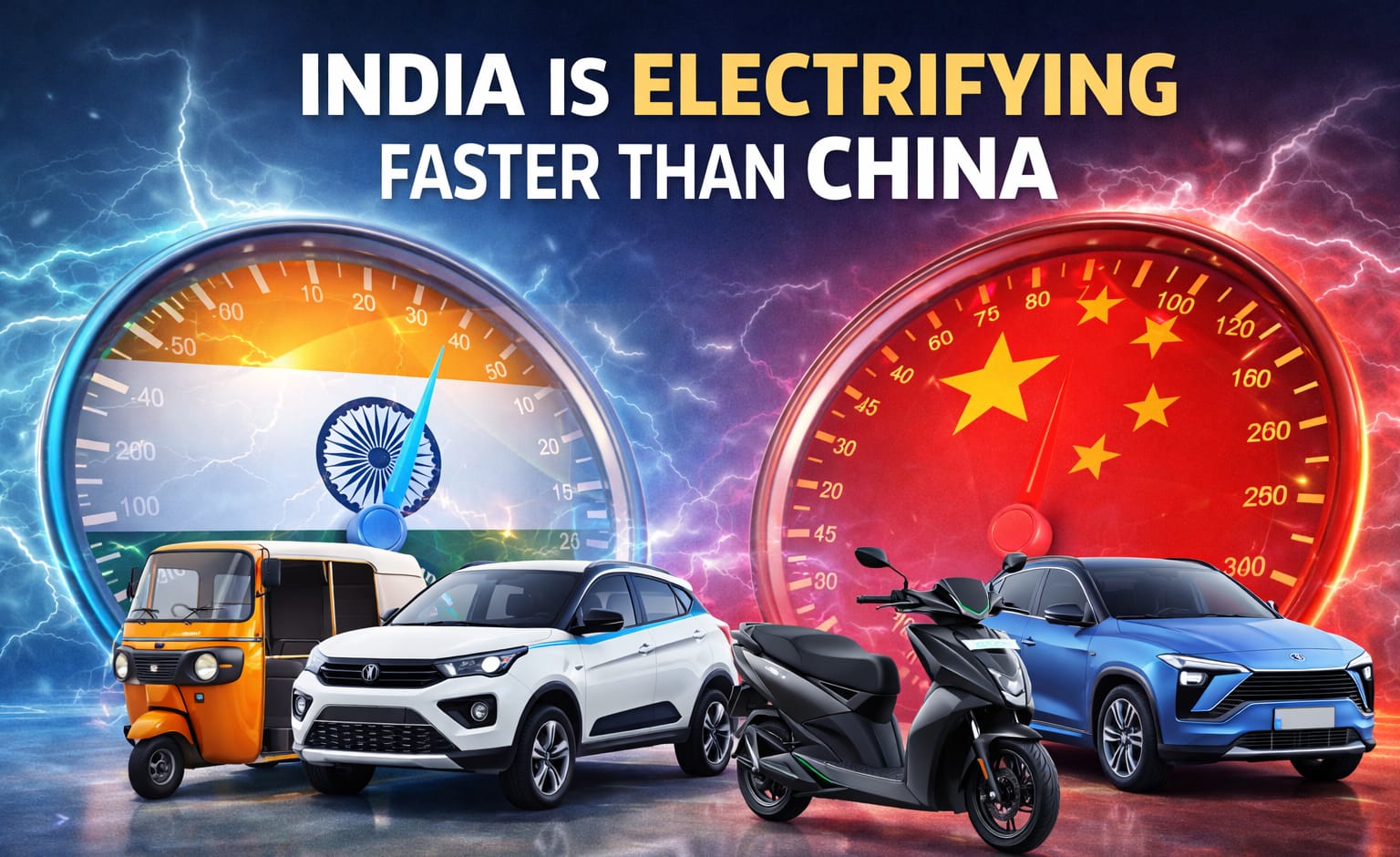
Due to a new analysis, global energy think tank Ember estimates that India is electrifying its economy even more rapidly than China did at the same economic development stages. Notably, the report points out that India is undergoing the transition to electricity-based development at significantly lower levels of income, which is an indication of a fundamental change in the possibility of decarbonizing the growth of emerging economies.
Low-cost Leadership leads to a quicker adoption
The availability of majorly cheaper clean energy technologies is one of the major factors that have led to the increased pace in the electrification process in India. It is important to note that the cost of solar panels, wind power equipment, and electric vehicles is currently much lower than it was when the country was going through the fast industrialization process ten years ago in China. This means that India can electrify the industries, transport, and households without necessarily depending on fossil fuels as was the case with the older growth models.
Reduced usage per capita of coal and oil
The Ember report also observes that India has a per capita consumption of coal and oil that is far below those of China at the same income levels. In the meantime, more electricity is served in India by renewable production, eliminating the use of carbon-rich fuels. In turn, India is proving that the financial development and the increase in the access to the energy do not necessarily imply the parallel rise of the fossil fuel usage.
The production of scale boosts clean energy initiatives
The manufacture of electronics within the country is also contributing significantly to the speed of electrification. As an example, the solar cell and module production plant in Mundra in the state of Gujarat by Adani Group is ramping up production capacity. In addition, mass production of solar parts is assisting in diminishing dependency upon imports, decreasing costs, and facilitating expediency in the implementation of renewables in the nation. Hence, the clean energy supply chain in India is getting stronger and more competitive.
Industrial and mobility implications
Other than power generation, electrification is spreading into transport and industry. Specifically, oil demand is not growing because of the increasing access to electric cars and electric industrial processes. Simultaneously, electrification based on renewable energy enhances energy security by reducing the exposure to unstable world fuel prices. The trend of electrification in India is therefore transforming various sectors in the country at the same time.
An Emerging Economy New Model
In general, findings given by Ember make India a case study of late-stage industrializers. In perspective, electrification using renewables with low costs that are rapid and environmentally friendly would enable India to bypass carbon-intensive routes. Finally, the path enhances the climate credentials of India as it grants the country a path to the continued growth of the economy in an ever-changing global energy environment.
