

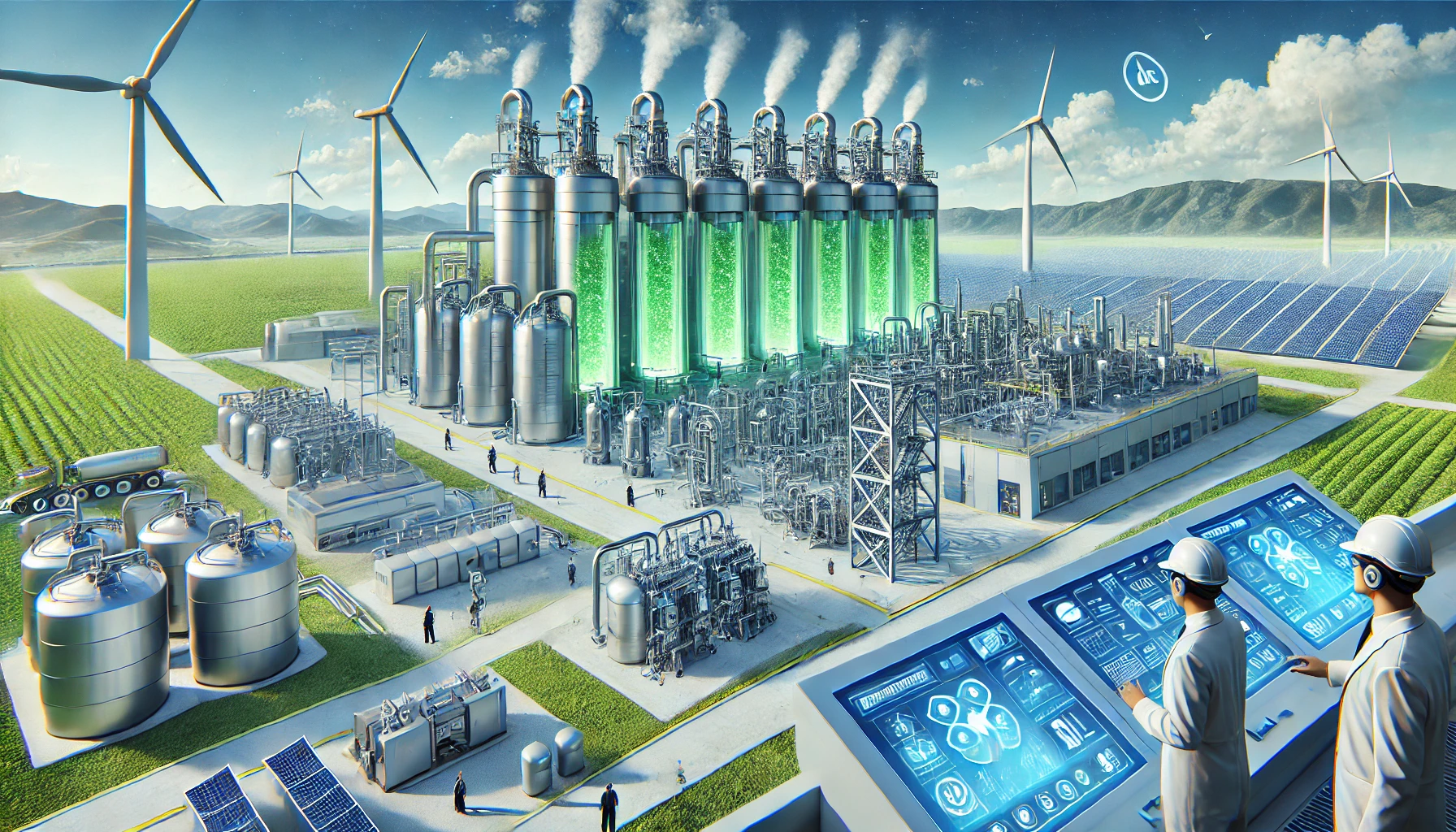
The global push for sustainability is driving advancements in green ammonia production, providing a carbon-free alternative to conventional ammonia production, which has traditionally relied on fossil fuels and contributed significantly to global CO₂ emissions.
Ammonia (NH₃) is used in agriculture, industry, and energy storage. The traditional Haber-Bosch process, high in energy requirements, is, however, the cause of almost 2% of human-caused carbon emissions. With advanced alkaline water electrolysis (AWE), driven by renewable energy, industries can now manufacture hydrogen without the need for fossil fuels, allowing for a more sustainable ammonia supply chain.
Applications of Green Ammonia
Future applications of green ammonia extend beyond agriculture as a clean source of energy for industries:
- Agriculture: Used in the production of fertilizers without the environmental expense of the conventional process.
- Energy Sector: As a low-cost carrier of hydrogen for energy storage and power.
- Shipping and Transport: Suggested as a promising zero-emission fuel for shipping through ammonia-fueled ships under International Maritime Organization (IMO) emissions regulations.
India’s Push for Green Ammonia
India has moved towards green ammonia production with massive steps in line with its aspiration to cut carbon emission. The National Green Hydrogen Mission plans to generate five million tons of green hydrogen per year by 2030, and government incentives encourage green ammonia projects.
The Ministry of Power’s Green Hydrogen/Green Ammonia Policy, released in February 2022, contains:
- Open access for the purchase of renewable energy.
- Exemption of inter-state transmission charges in case of projects commissioned prior to June 30, 2025.
- Banking systems enabling producers to bank excess renewable energy for up to 30 days.
Several large-scale projects are underway in India, including:
- Avaada Group’s Tie-Up with Casale: Commissioning India’s largest grassroots green ammonia plant.
- AM Green’s Kakinada Project: One million tons of renewable ammonia per year by 2026.
- Andhra Pradesh Green Hydrogen and Green Ammonia Policy: Two million tons of renewable ammonia per year by 2028.
Challenges and Future Outlook
Though green ammonia is cost-effective and eco-friendly, industry leaders see bottlenecks in the form of production costs, infrastructural investment, and the need for well-defined regulatory parameters. Nevertheless, falling renewable energy prices and technological improvements in the efficiency of electrolyzers will help improve the economics of green ammonia manufacturing.
Rising global demand and corporate policy support lead industry professionals to believe mass deployment of green ammonia is close at hand, with India emerging as a principal global player in the transition towards clean energy.
Read Also: Delhi EV Policy 2.0 Targets 95% Electric Vehicles by 2027
