

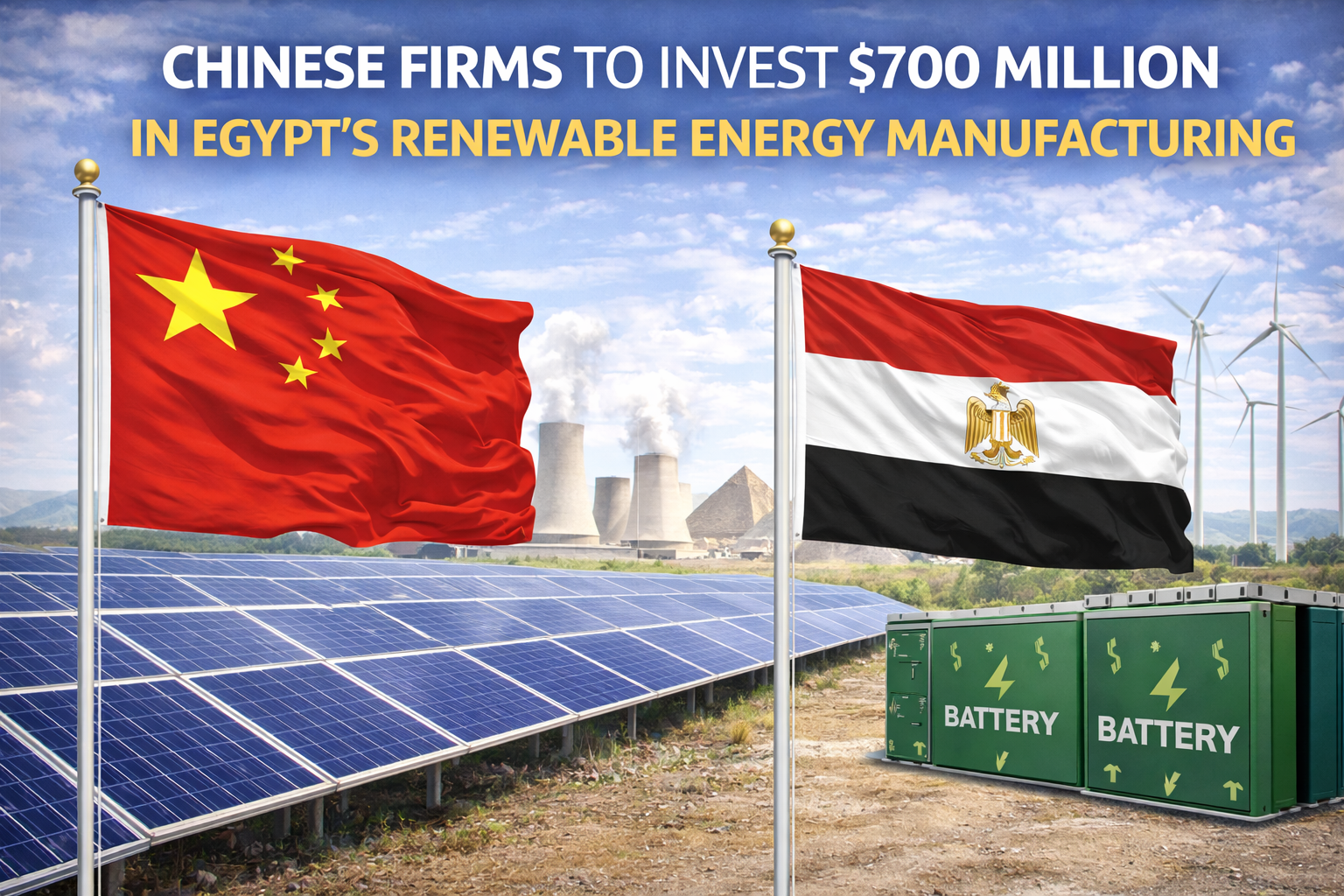
Egypt is getting a major boost in its clean energy manufacturing sector. Chinese companies have agreed to pump hundreds of millions of dollars into building factories for solar cells, battery storage, and power inverters in the country.
Big Deals Signed During China Visit
The agreements came together during Egyptian Electricity Minister Mahmoud Esmat’s official trip to China. Local firm Kemet signed multiple deals with Chinese manufacturers to set up production facilities in Egypt.
The largest investment is in Suzhou Weicheng, a subsidiary of GCL Group. They will build an integrated solar cell and PV module factory with an annual capacity of 5 GW. The project requires approximately 280,000 square meters of land and carries a $500 million price tag. The deal also includes technology transfer and local workforce training.
Battery Factory Worth $200 Million
Another major agreement was inked with Cornex. The Chinese company will build a plant to manufacture battery cells capable of producing 5,000 MWh annually. This facility alone requires $200 million in investment.
What makes this project interesting is that it will use local raw materials and components. The batteries will help stabilise Egypt’s grid as more solar and wind power comes online.
First Power Inverter Factory Coming
Kemet also partnered with TBEA to construct Egypt’s first-ever facility for manufacturing power inverters. These inverters are essential for connecting renewable energy projects to the national grid. The partnership also covers electrical equipment, grid systems, and training programmes.
Egypt’s Bigger Picture
Minister Esmat said these deals fit into Egypt’s larger plan. The country wants to become a regional hub for renewable energy equipment manufacturing. Right now, most of this equipment gets imported. Local production will cut costs and create jobs.
The government is backing private-sector partnerships to help build a domestic industry. As renewable energy grows in Egypt’s power mix, having local manufacturing capability makes a lot of sense.
These investments show growing Chinese interest in Africa’s energy transition. For Egypt, it means less dependence on imports and more control over its clean energy future.
