Close Menu
    Advertise With Us
    Facebook X (Twitter) Instagram
    Monday, February 9
    Advertise With Us
    Facebook X (Twitter) Instagram
    Greenisthefuture
    • Top Stories
    • Renewables
      • Solar Energy
      • Wind Enegry
    • Electric
      • 2 Wheeler
      • 4 Wheeler
      • Battery
      • Charger
      • Infrastructure
    • Clean Energy
    • Eco Innovator
    • Global
    • Interview
    Subscribe Now
    Greenisthefuture
    You are at:Home » Global Rare Earth Race Intensifies as EV Transition Accelerates
    Clean Energy

    Global Rare Earth Race Intensifies as EV Transition Accelerates

    SINDHBAJ KUMARBy SINDHBAJ KUMARJanuary 30, 20263 Mins Read
    Share Facebook Twitter Pinterest LinkedIn Tumblr Email
    Share
    Facebook Twitter LinkedIn Pinterest Email

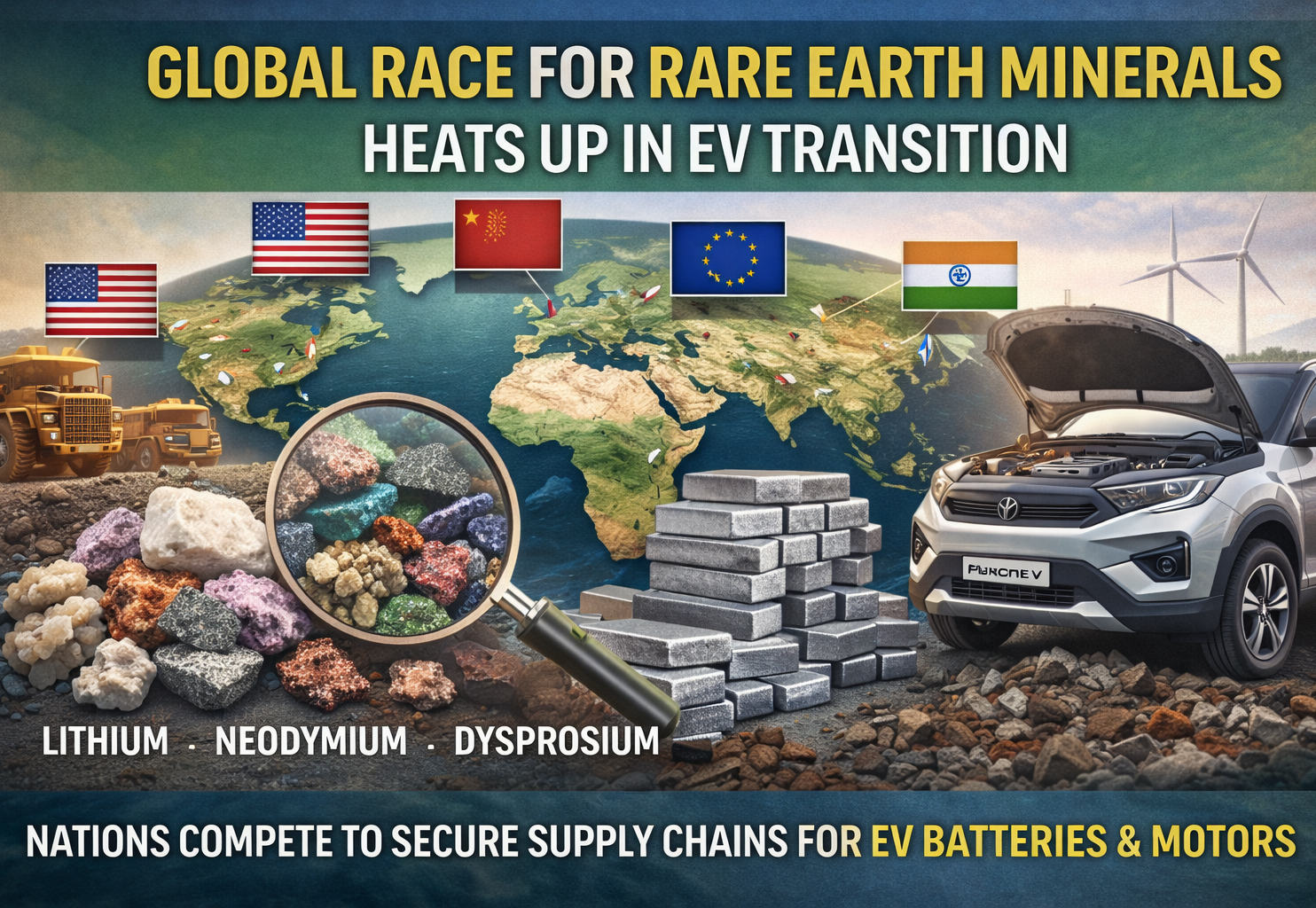
    The world energy transformation to clean energy is increasing the race for the rare earth minerals that are critical to electric vehicles, renewable energy generation systems, and advanced electronics. Due to the quest by countries to achieve climate goals and lessen reliance on fossil fuels, access to such vital resources has become a strategic goal.

    Among the rare-earth elements, neodymium, dysprosium, lithium, and nickel are essential elements in EV motors, batteries, or wind turbines.

    As the adoption of electric vehicles spikes all across the globe, the demand will put more strain on the world market in the context of the overgrowth of these minerals and their insufficient supply.

    Concentration of supply is a source of geopolitical concern

    The extraction and refining of most of the rare earth minerals is currently very concentrated in limited countries. The concentration has brought fears to key economies on the issues of supply shocks, volatile prices, and strategic weaknesses. Governments are, in turn, reforming mineral security policies to mitigate importation as a source of supply and establish domestic or ally supply chains.

    Various countries have proclaimed additional measures such as exploration perks, capital subsidies, long-term offtake agreements, and strategic protection of stores. These measures are meant to have a supply chain of uninterrupted availability of raw materials required in the manufacture of EV and clean energy infrastructure.

    The EV industry is in the middle of the minerals push

    The manufacturers of electric vehicles are facing the risks of the supply of rare earths especially. High-efficiency and compact-design permanent magnet motors are widely utilized in EVs and rely on rare earth materials. Lithium and nickel are also important in battery chemistries, contributing to a major part of the vehicle price and scalability.

    To overcome this, automaker companies are putting money into other motor technology, recycling, and long-term sourcing alliances. Other firms are also considering eliminating the use of magnets in their motor designs in order to avoid reliance on rare materials.

    Emerging Economies Step Up

    The growing economies are also rising to compete as an alternative processing of the rare earth. Nations that have not exploited their reserves are trying to invest so as to develop refining and manufacturing facilities that would enable them to take more of the value of the clean energy supply chain.

    Long-Term Implications

    According to experts, the global EV transition rate and price will be determined by the rare earth race. Achieving sustainable, diversified mineral supply chains has now become a priority not just under the goals of climate but also under the wider aspects of economic and energy security in the global arena.

    Clean Energy Transition Critical Minerals electric vehicles EV Batteries EV transition Global Energy green technology lithium supply nickel demand rare earth minerals
    Share. Facebook Twitter Pinterest LinkedIn Tumblr Email
    Previous ArticleBPCL Expands Renewable Portfolio with 71 MWp Solar Plant at Prayagraj
    Next Article Fixed Offshore Wind Energy Market Eyes $59.5 Billion Valuation
    SINDHBAJ KUMAR

    Related Posts

    Budget 2026 prolongs EV Manufacturing industry

    February 2, 2026

    Budget 2026: Government Extends Duty Relief for Battery Manufacturing, Cheaper EVs on the Horizon

    February 1, 2026

    India’s Renewable Capacity Crosses 190 GW

    January 31, 2026
    Add A Comment
    Leave A Reply Cancel Reply

    Top Posts

    BCCI’s Green Pitch for Sustainable Cricket Future

    February 16, 2025

    Global Push for Sustainability Drives Green Ammonia Production

    March 18, 2025

    WPL 2025: Cricket Scores for Sustainability, Too!

    March 14, 2025

    Delhi EV Policy 2.0 Targets 95% Electric Vehicles by 2027

    March 11, 2025
    Don't Miss

    India Enhances International Connections to Increase Renewable Energy and Grid Storage

    By Aditya PandeyFebruary 3, 2026

    The Indian government is increasing its quest to forge international collaboration in renewable energy, green…

    Budget 2026 prolongs EV Manufacturing industry

    Caliber Interconnects Secures ARAI Certification, Boosting India’s EV Charging Infrastructure

    Mercedes-Benz Confirms CLA EV Launch in India for April 2026

    Newsletter

    Subscribe for Updates

    Get the latest updates from GreenIsTheFuture

    About Us

    Green technology can be used to reduce pollution and waste products of traditional industrial processes. In addition to reducing the negative effects on the natural environment, these technologies can also use resources more efficiently.
    Email Us: info@greenisthefuture.in

    Facebook X (Twitter) YouTube WhatsApp
    Quick Links
    • About Us
    • Our Team
    • Privacy Policy
    • Advertise With Us
    • Terms & Conditions
    • Subscription
    Newsletter

    Subscribe for Updates

    Get the latest updates from GreenIsTheFuture

    © 2026 Designed by GreenIsTheFuture.

    Type above and press Enter to search. Press Esc to cancel.