

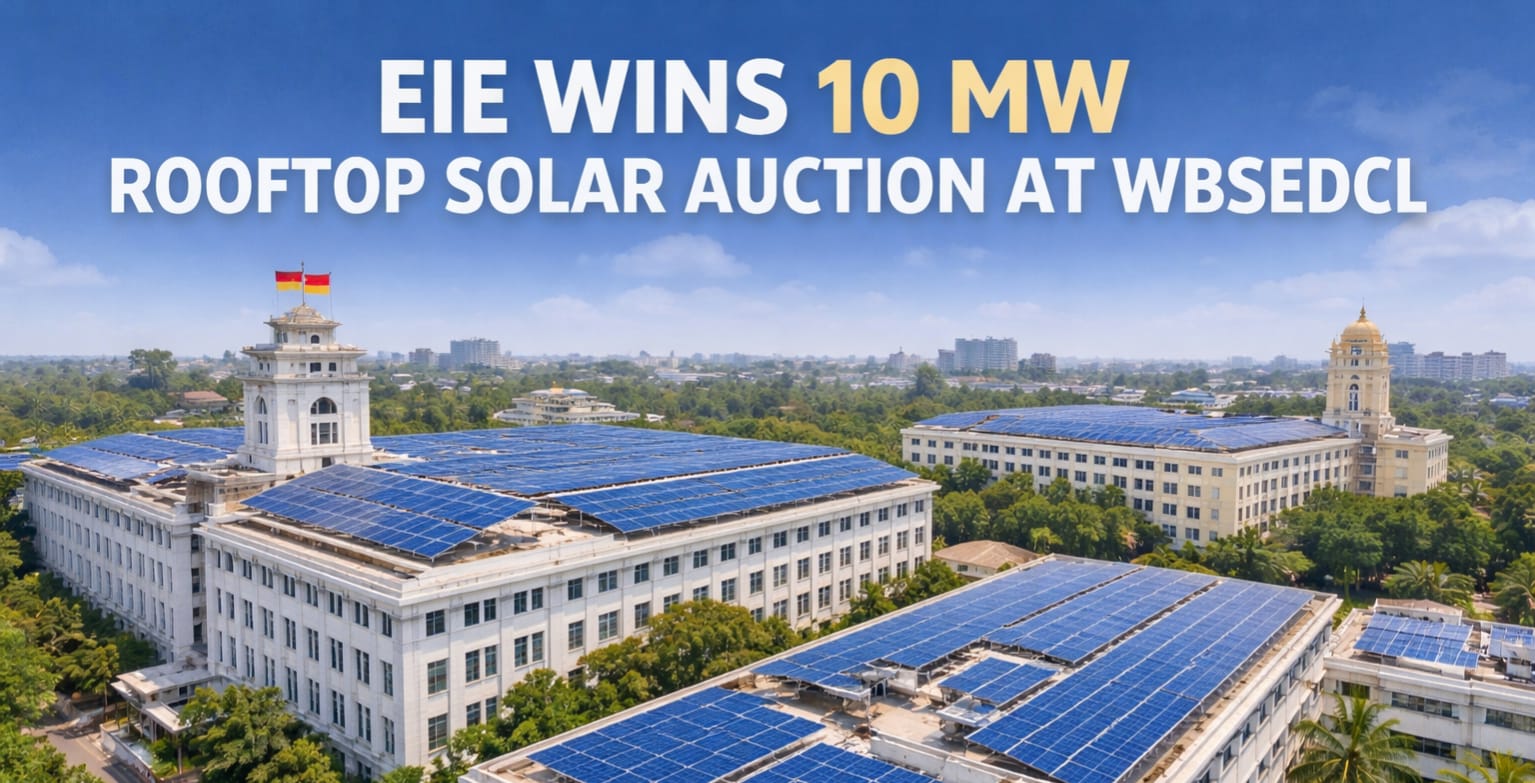
Recently EIE won the 10 MW rooftop solar auction of West Bengal State Electricity Distribution Company Limited (WBSEDCL), and it reaffirmed the state policies regarding the deployment of renewable energy in a decentralized approach. It is important to note that the project is part of the overall plan of WBSEDCL to increase the clean power production and utilize untapped areas of rooftops of government/institutional buildings.
Project Deployment Plan and Project Scope
Within the auction model, EIE will construct a cumulative 10 MW of grid-connected rooftop solar photovoltaic systems at various identified sites in West Bengal. Notably, the installations will be dispersed among the facilities of WBSEDCL and other specifications of the public buildings and buildings, meaning that the available infrastructure will be used efficiently. In addition, the rooftop model enables distributed generation, which leads to minimization of the transmission losses and enhancement of local power reliability.
Technical Organization and Accountabilities
According to the details in the tender, EIE shall act as the end-to-end performer, engineering, procuring, building, and testing as well as commissioning the solar systems. Secondly, the scope includes long-term operation and maintenance to provide steady performance throughout the course of the contract. As a result, solar modules of high efficiency, compliant inverters, and sturdy mounting structures will be installed to satisfy recommended technical and safety requirements.
Tariff structure and agreement in contracts
In the meantime, the auction was eligible using a competitive system of bidding with tariffs that were revealed openly under the current market forces. After the selection, EIE will sign a power purchase or energy supply contract with WBSEDCL for a specified tenure period, which guarantees a certain revenue. In addition, the design is made in a manner that helps in the procurement of cost-effective solar energy by the utility to benefit the grid and its final consumers.
Strategic Implication for WBSEDCL
Policywise, the 10 MW rooftop solar will help WBSEDCL meet its renewable purchase requirements, as well as its goals of clean energy in West Bengal. Meanwhile, rooftop environmental sustainability improves the energy security of areas by diversifying the power mix and not being so attached to traditional sources. Hence, the project will be in line with the national goals of encouraging the uptake of rooftop sun in urban and semi-urban areas.
Industry Impact and Outlook
The victory of EIE, in general, takes into consideration the increasing competition, as well as the optimism about the industry of rooftop solar PV in India. In the future, the successful implementation of this project will lead to more rooftop solar tenders in West Bengal, which will help increase the pace of transition in the state to a sustainable and low-carbon energy environment.
