

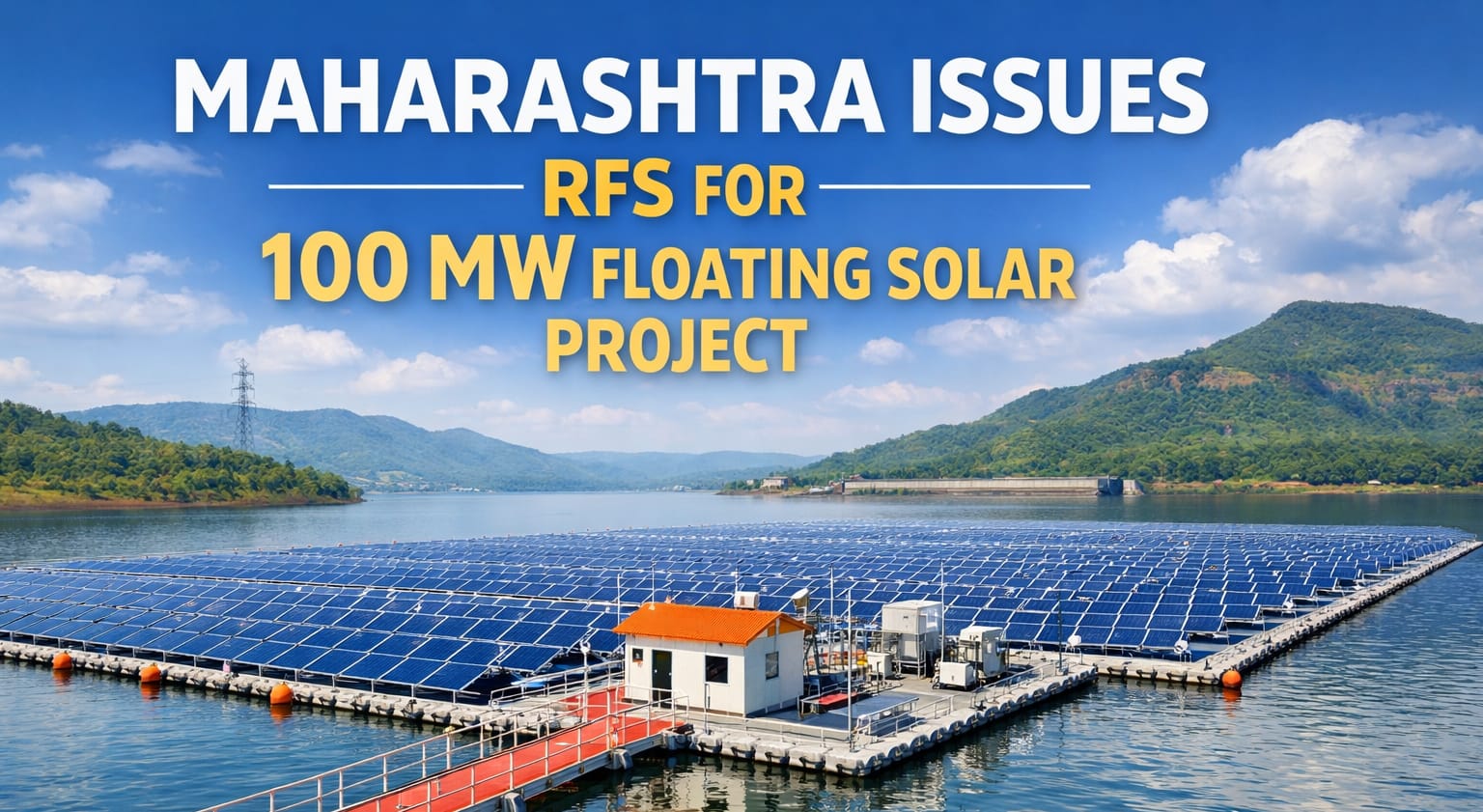
Maharashtra has also recently given a Request for Selection (RfS) to develop a 100 MW floating solar power project, another move in the right direction for the state in terms of its renewable energy expansion strategy. It is worth noting that the move is also in line with the overall clean energy roadmap of Maharashtra that focuses on innovation, land efficiency, and optimization of water resources.
Project Scope and Project Highlights
In particular, the RfS also encourages established renewable energy developers to design, engineer, fund, build, and operate a grid-connected floating solar photovoltaic power project with a cumulative capacity of 100 MW. The project will also be established in an identified water body like a reservoir or a dam, hence limiting the hurdles faced in land acquisition and also reducing water evaporation losses. Noteworthy, floating solar technology is gradually being considered as a viable solution for land-restricted states with a high power need.
Technical Framework and Implementation Framework
Moreover, the developer chosen will be charged with the responsibility of installing high-performance solar panels atop the flotation systems that can withstand fluctuation in height of water and climatic conditions. Similarly, it also has other related electrical infrastructure, including the inverters, transformers, and evacuation facilities, to make the smooth integration into the grid. As a result, the project is bound to produce renewable energy that is reliable with the environmental and structural safety standards.
Procurement and Selection Process
As such, the RfS provides a competitive bid process, though perhaps the choice is made using tariff-based criteria on the basis of technical qualification. Moreover, the bidders should show a track record of conducting previous utility-scale solar projects and a specified financial requirement. The winning price will then sign a long-term power purchase deal, which will make the prospective cash flows revenue and bankable.
Strategic Significance to Maharashtra
Finally, this project is a 100 MW floating solar, which supports the decision by Maharashtra to diversify renewable energy. Besides, the floating solar is an addition to ground-based and rooftop systems, helping to stabilize the grid and manage peak demand. Consequently, the initiative has the effect of minimizing carbon emissions and enhancing energy security.
Outlook and Industry Impact
Generally, domestic and international renewable energy players are likely to be keen on the issuance of this RfS. So, the project might become the precedent for similar solar installations in the state, which will lead to the faster process of Maharashtra developing the new cleaner and more sustainable environment of power.
