

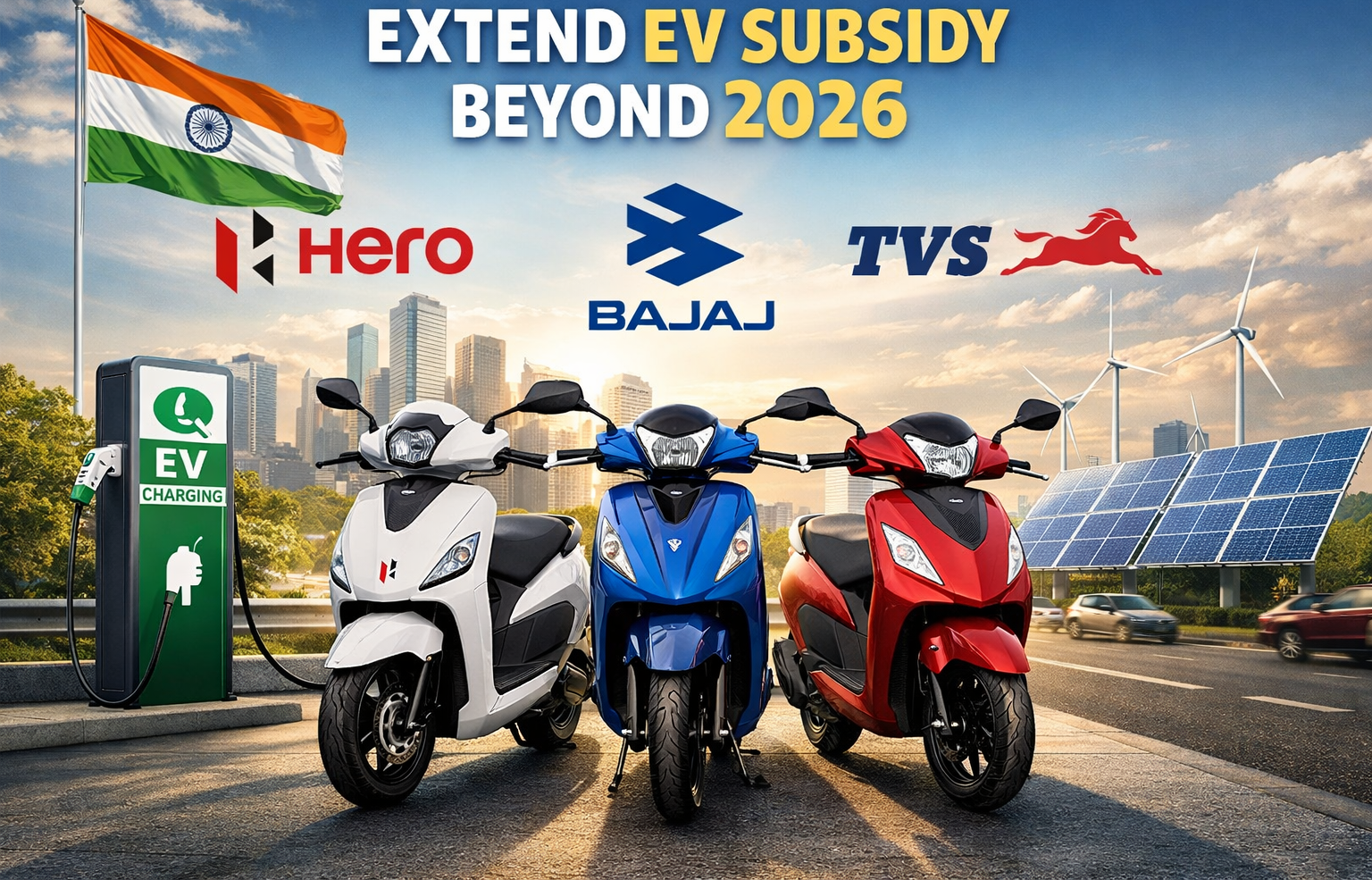
The two main manufacturers of two-wheelers in India, Hero MotoCorp, Bajaj Auto, and TVS Motor Company, have pressured the central government to expand the existing subsidy programs of electric vehicles (EV) to a later date of March 2026. According to the companies, more time is necessary to use the money allocated optimally and to maintain the same pace of crisis in the adoption of electric two-wheelers in the country.
Major actors illuminate the problems of market transition
Industry executives claim that the market of two-wheeler EVs is at the crucial transition stage. Although demand is on the upswing, manufacturers report that price sensitivity by buyers is also high, particularly in the mass market.
Subsidies have decisively been used to reduce the difference between the costs of electric and internal combustion engine (ICE) vehicles so that EVs are more affordable to the first-time buyer.
The three companies (Hero, Bajaj, and TVS) have all stressed that a sudden removal of incentives may interfere with consumer confidence and slacken adoption when the market is just getting level.
Utilization of funds is still incomplete
The main argument that has been brought out to the policymakers is that a large percentage of the subsidy money cannot be utilized. The manufacturers attribute this to the early policy implementation delays, supply chain delays, and time needed to localize EV components, especially batteries, motors, and power electronics.
The extension would enable the industry to allocate these funds in a better way, with relation to supporting domestic manufacturing objectives.
Increase to Production and Localization
The businesses have further emphasized the fact that such long-term subsidies will promote further localization of EV parts in the so-called Make in India initiative.
The incentives would also contribute to increasing the production level of manufacturers and investing in innovative technologies and enhancing the EV supply system in India, including battery recycling and charging infrastructure.
Confluence with the Climate Goals of India
The industry leaders feel that increasing EV subsidies is relevant to the long-term climate and energy security targets of India. Electric two-wheelers dominate the market in Indian personal mobility systems, and the adoption can be much faster to ensure the substantial reduction of urban emissions and importation of oil.
The decision of the government is awaited
Although the government has not officially announced its position, people have been informed that officials are considering industry responses. It is likely to be a critical month ahead because policy clarity will drive investment intentions, product introductions, and pricing plans before the deadline of 2026.
