

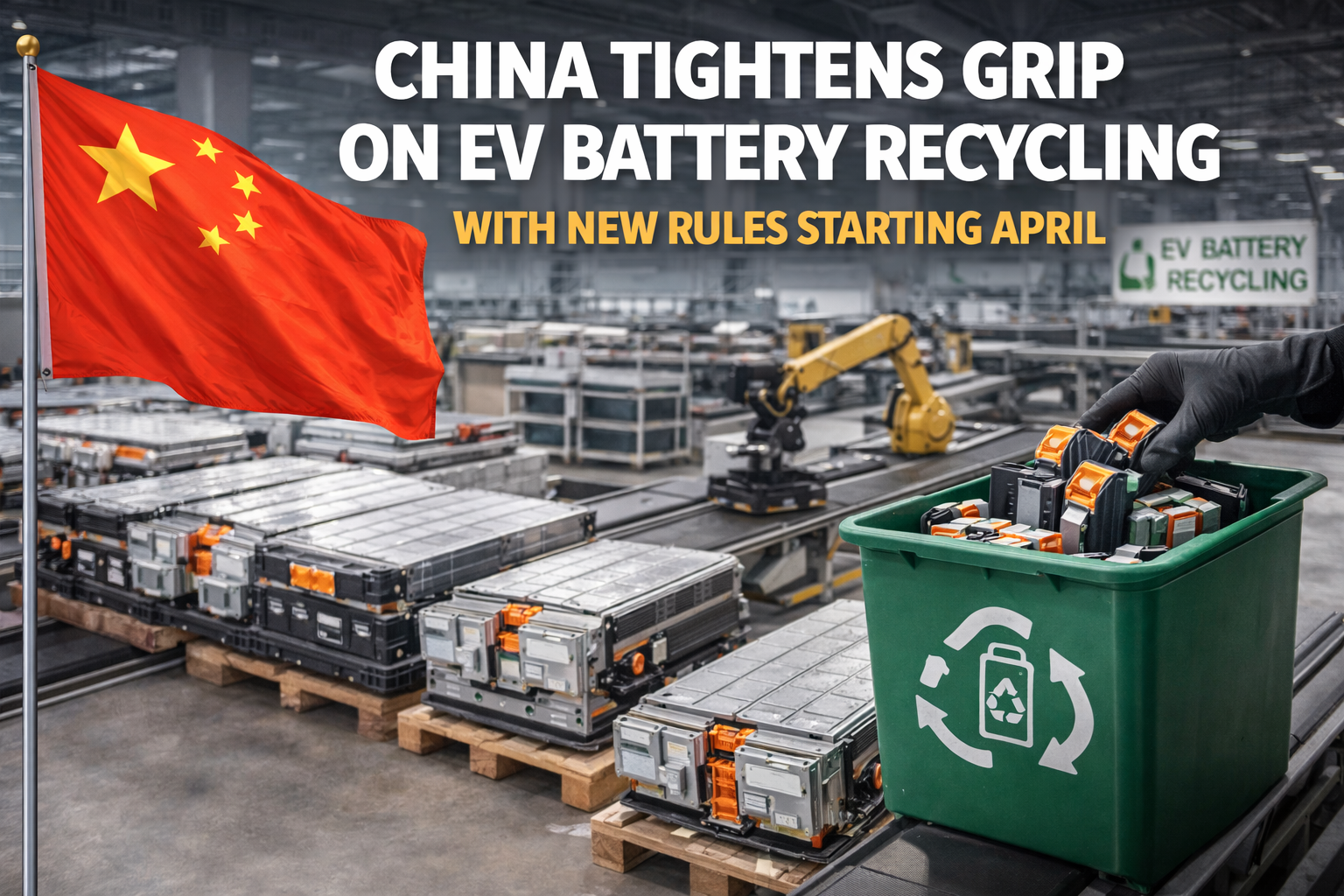
China just got serious about what happens to electric vehicle batteries after they die.
The government issued new rules on January 16 that force automakers and battery producers to follow their products all the way to the recycling bin.
What Changes
The Ministry of Industry and Information Technology will build a national tracking system. Every battery gets monitored from the moment it leaves the factory until it gets recycled. Production, sales, repairs, replacements, scrapping — all of it goes into the database.
Here’s the big one. EV batteries must now stay with the car when it gets scrapped. No more pulling them out and selling them off to whoever pays the most. That loophole is closed.
Manufacturers and importers face new paperwork, too. They have to submit disassembly instructions within six months of getting product certification. Battery codes and sales dates must be reported within 20 days.
Recycling Stations Now Mandatory
Any company selling EVs or batteries in China must set up recycling collection points in the regions where they operate. They have to accept all retired batteries from their products. No exceptions.
Battery swapping companies and service centres can’t just dump old units anywhere. They must hand them over to approved recycling facilities or collection centres run by manufacturers.
The rules also push for cleaner production. Battery makers must use low-toxicity materials that are easier to recycle. Every unit needs proper identification in accordance with national standards.
Why This Matters Now
China leads the world in EV production, and that means a mountain of dead batteries is coming. Research groups expect retired batteries to hit 1 million tonnes by 2030.
The recycling market already reached 558 billion yuan last year — roughly $78 billion. Brunp Recycling, which is tied to battery giant CATL, handles about half of all EV battery recycling in the country. They process 120,000 tonnes annually.
Chinese recyclers have gotten good at this. Some companies now recover 96.5% of lithium and over 99% of nickel, cobalt, and manganese from old batteries.
But the system had holes. Batteries disappeared into informal channels. Tracking was spotty. These new rules aim to plug those gaps before the recycling wave hits full force.
