

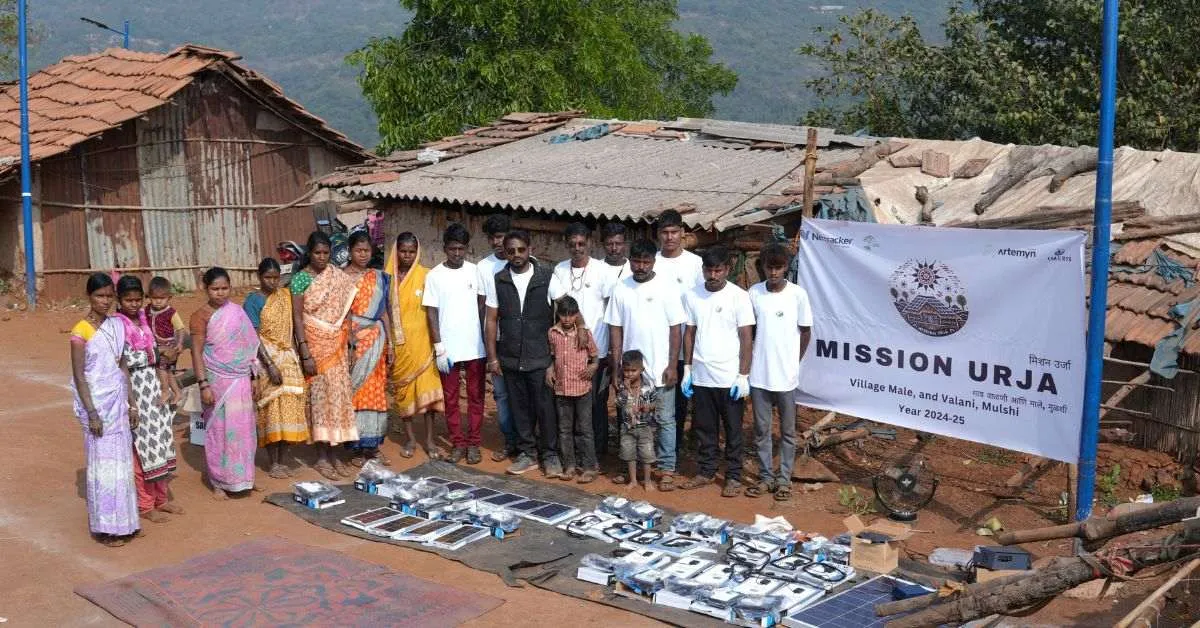
In 2026, Maharashtra’s tribal communities are witnessing a transformative shift as solar power solutions expand across villages, bringing electricity to thousands of homes. The tribal groups in Maharashtra are also undergoing a revolution as solar power plants are being installed in many of the village areas to provide electricity to thousands of households. Based on projects initiated in 2022, such programs as Mission Urja have been scaled, which provides sustainable energy access to families who used kerosene lamps before.
Solar Power Expands in 2026
In Maharashtra, over 1,400 tribal households, mostly belonging to the Katkari and Kunbi communities, will have been electrified by using portable and microgrid solar systems by the end of 2026. These systems are planned to satisfy various requirements:
Portable solar panels Light These portable solar panels are lightweight, foldable panels that can be used by migratory families to power lights and fans and charge mobile devices.
Microgrids at the village level: They are designed in the settlement’s tribal hamlets and offer a regular power supply to homes and community areas.
Hybrid solutions: Solar + micro-hydroelectric Hi-tech in hilly areas, so it became reliable all year round.
TREEI Foundation and Mission Urja
In 2022, Mission Urja was introduced by the TREEI Foundation; it was the first project by the engineer Tanveer Inamdar to expand the sector. Although the foundation was initially dedicated to water solutions, it shifted towards energy when it realized electricity was a major gap in the development of the tribes.
The program is going even larger in 2026 with a focus on 2,000+ households in such districts as Raigad, Palghar, and Thane. Mission Urja had also covered over 1400 homes by 2025.
The project focuses on community education, which allows the locals to sustain and run the solar units on their own.
Social and Economic Impact
Solar electrification has many advantages:
- Education: Children are now able to study at night, which enhances literacy and performance in school.
- Health & safety: The less reliance on kerosene lamps will decrease indoor pollution and fire risks.
- Economic empowerment: Women employ sewing machines that operate on solar power and little home appliances to earn wealth.
- Connection: Mobile charging facilitates enhanced communication and connection with government schemes.
Future Outlook
It is estimated that Maharashtra will be a model state in regard to decentralized renewable energy by the end of 2026. The tribal electrification is expected to grow quickly with state solar policies and the assistance of the government and grassroots innovation.
- Target penetration: 10,000 tribal homes in 2027.
- Scalability: There is an opportunity to duplicate portable solar kits in other states where there are migratory tribal communities.
- Sustainability: These projects are part of the overall net-zero 2070 targets of India, which will decrease fossil fuel usage.
Conclusion
Localized innovation can make a nation move forward, as the example of Maharashtra tribal villages has proven the application of solar power solutions to be successful. In 2026, projects such as Mission Urja are not only illuminating residential buildings but also empowering populations, creating energy equity, and changing the future of clean energy in India.


