

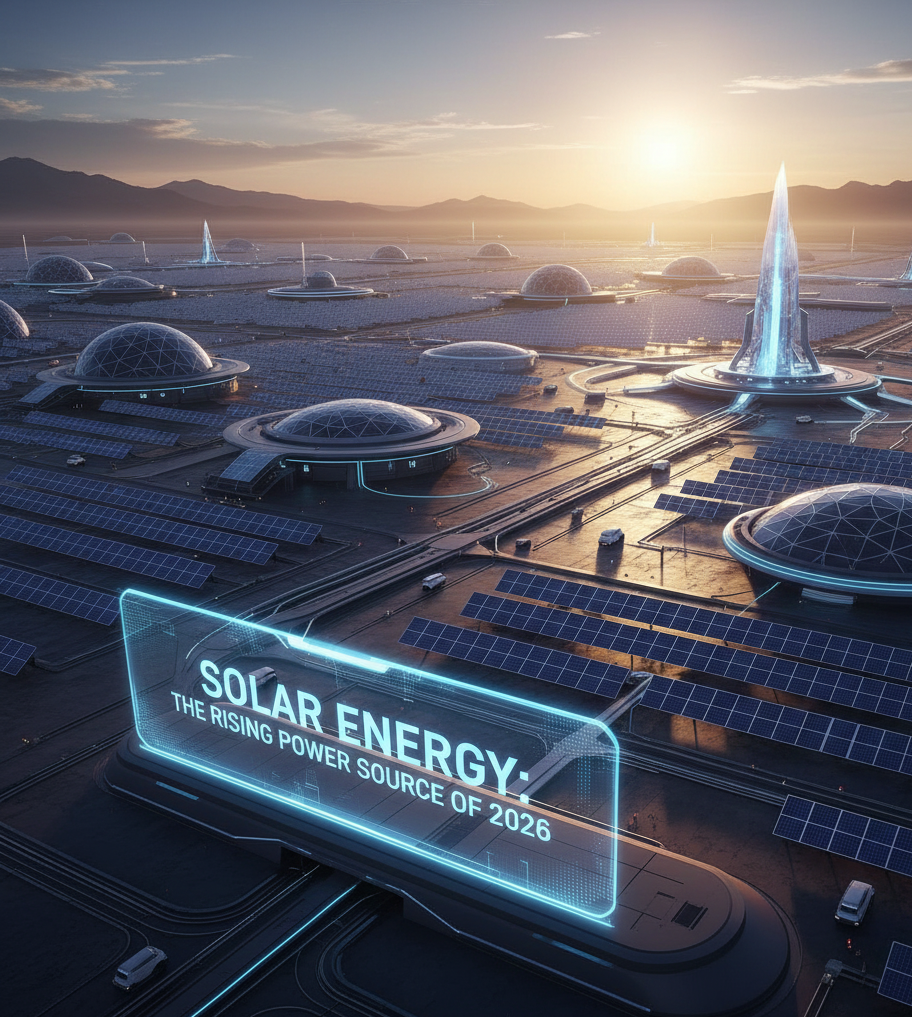
Solar power has become the most significant stake in the innovation of the renewable energy policy in India. Increased demand of electricity, issues of climate change and reduction in the cost of technology has brought solar power to the centres of energy planning of nations. By the year 2026, solar is no longer an alternative source of power, but it is defining the future of the Indian economy, environment and energy security.
New Solar Technology and Innovation.
New Solar Technology and Innovation .The solar industry is experiencing high innovation. Very recently, ultra-powerful 470–watt 470-watt solar panels have been introduced which means that residential buildings are now capable of producing more power using less rooftop space. Scientists have also come up with better cooling systems that ensure the panel works at a cooler temperature thus promoting efficiency and making them longer lasting.
During CES 2026, the first solar-vehicle hybrid smart charging hub ever made its debut in the world, which was capable of charging down batteries 13 times quicker through solar, vehicle power, or a combination thereof. Such advances are making solar power smart and high-performance energy solution to both homes and companies.
Solar Growth in India: News and Statistics.
The solar capacity of India is increasing at an incredible rate. The country has been adding an average of nearly 18 GW of solar capacity in the first half of 2025, by which this figure has increased by more than 30 per cent compared to the first half of 2024. At the close of 2025, India had achieved its landmark of 100 GW of cumulative installed solar power and this places India within the top global solar producers.
Rajasthan is putting up over 13,000 rooftop solar systems each month on a state subsidy basis, and Uttar Pradesh topped 1 GW of installed solar capacity, much of it through rooftop systems in cities and semi-urban areas.
Policy Push & Future Outlook
Mega tenders which include the 2,450MW solar-plus-storage project are issued by the government to prevent power power outage even after the sun sets. There is an urge to make banks to invest more in domestic production of solar, in order to lessen reliance of imports.
Solar energy is poised to continue to act as the pillar of clean energy transition in India in the upcoming decade with innovation efforts, good policy backing, and increasing citizen engagement.
