

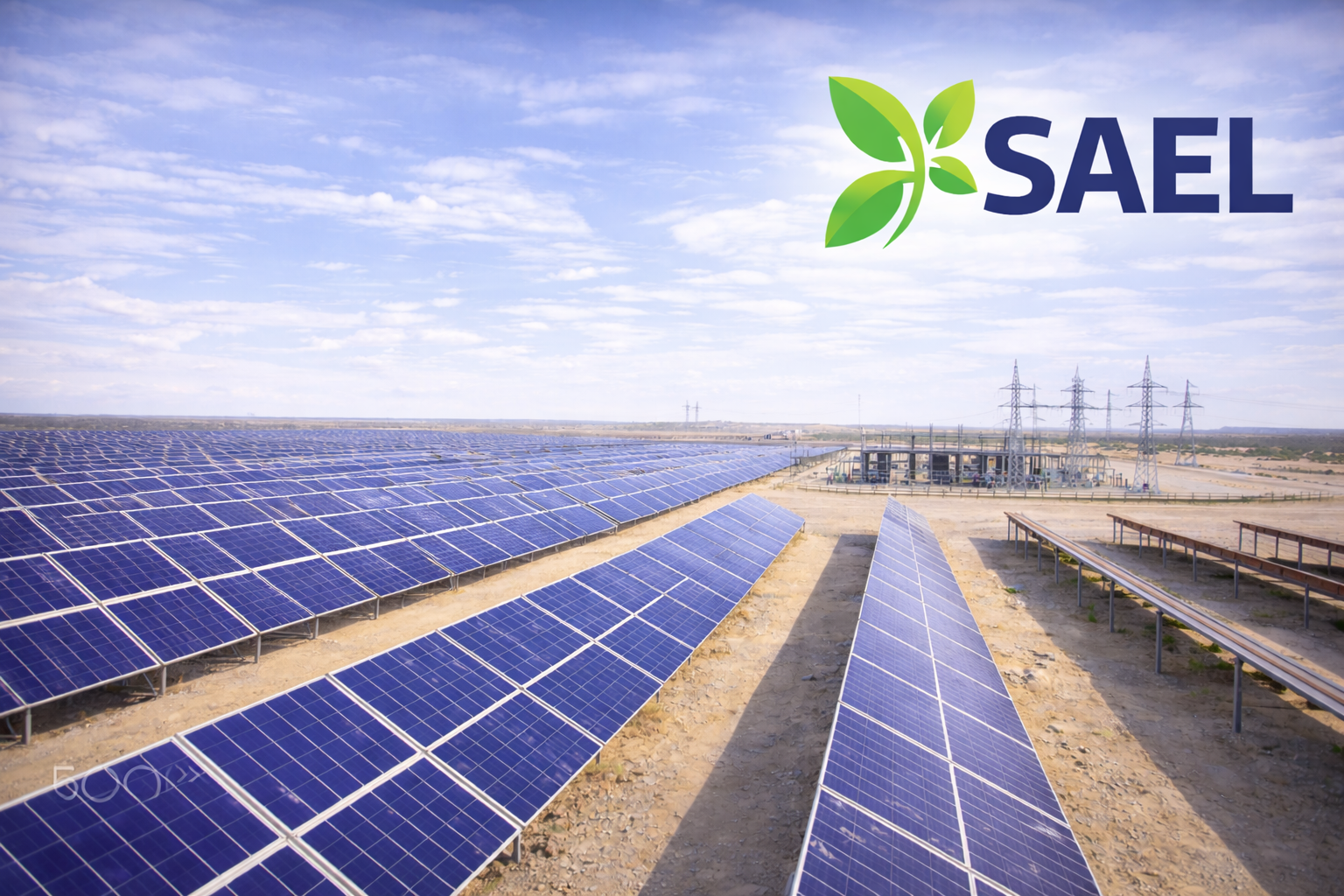
The 1 GWp solar power plant at Khavda in Gujarat, commissioned by SAEL Industries, is a major addition, bringing its total operational capacity over the 2 GWp mark.
In the project, the company constructed it under two subsidiaries, SAEL Solar P4 Private Limited and SAEL Solar P5 Private Limited, with 400 MW and 500 MW capacity, respectively.
The project is accompanied by 25-year power purchase agreements signed with Gujarat Urja Vikas Nigam Limited. These are long-term contracts that provide SAEL with a predictable revenue over decades.
The facility operates more than 15 lakh TOPCon bifacial modules. Over 60% of these panels were produced in-house in Punjab and Rajasthan, so things were kept in tune with the Make in India push.
Difficult Ground, Successful Implementation
The construction of Khavda was not easy. The location is on almost 3,600 acres along the western border of India, which can be tricky.
The region is concerned with salt soil and floods. The site is submerged in areas to nearly a metre of water in period of peak monsoon. The completion of the project, despite these hurdles, demonstrates the strength of SAEL’s engineering and execution.
Company Sees Bigger Picture
Laxit Awla is the CEO and Executive Director of SAEL Industries, which oversees the project in line with India’s broader clean energy objectives.
He said that by developing Gujarat’s terrain into a clean energy zone on a grand scale, not only will it be possible to build a large capacity for RE, but also to minimise dependence on traditional sources of power.
Awla further stated that the project provides green jobs and helps India meet its non-fossil fuel commitments by 2030.
Expansion in the Cards Manufacturing
SAEL is not stopping its efforts at power generation. In November last year, the Yamuna Expressway Industrial Development Authority awarded the company a 200-acre manufacturing plant.
The solar cells and module capacity of the integrated plant will be 5 GW and 5 GW, respectively. It aims at reducing reliance on imported solar equipment and also generating employment on the ground.
The commissioning of this makes SAEL a strong player across the entire renewable energy value chain, both in panel production and in power generation.
