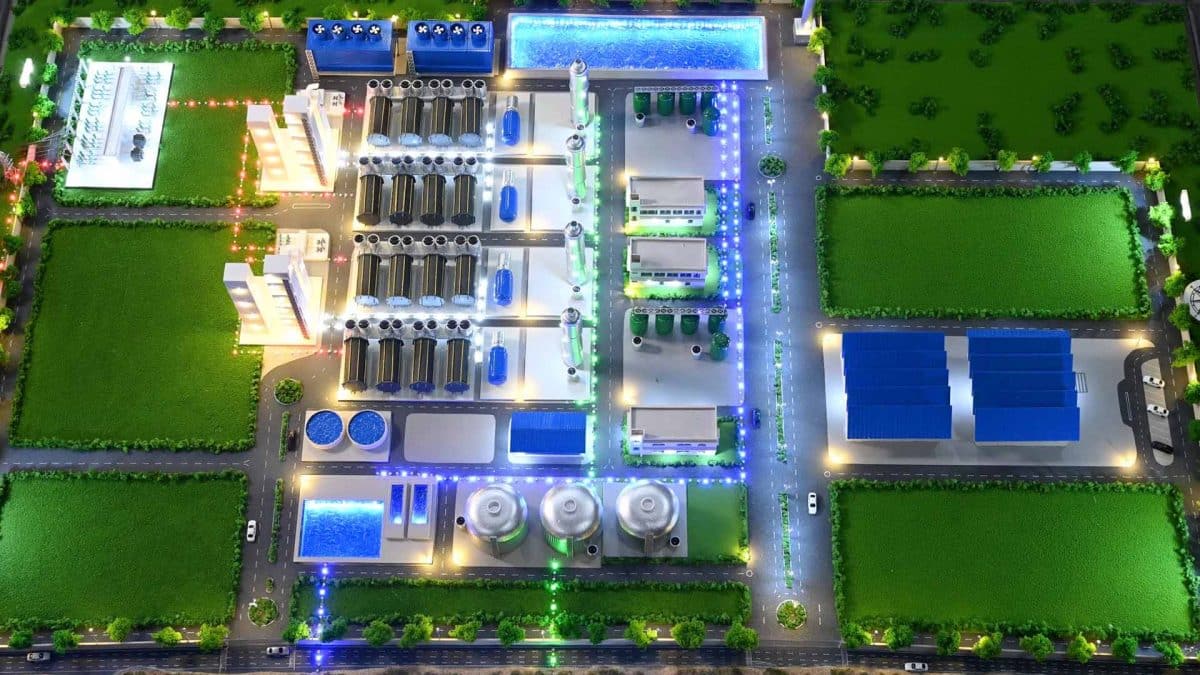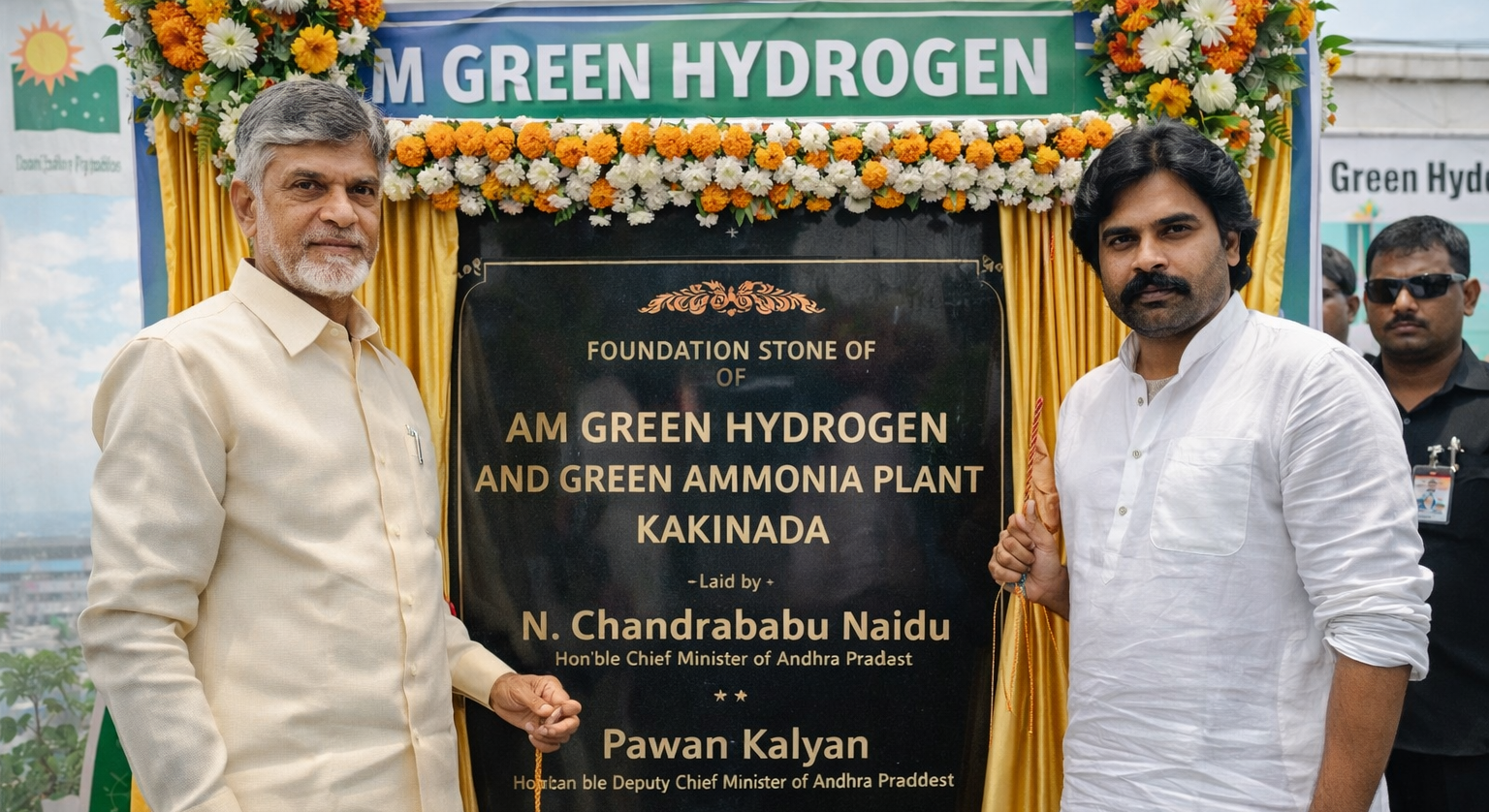
Moving towards leadership of clean energy has been made with Andhra Pradesh declaring Kakinada to be a Green Hydrogen Valley. The chief minister, N. Chandrababu Naidu, and the deputy chief minister, Pawan Kalyan, inaugurated the AM Green Hydrogen and Green Ammonia Plant in Kakinada, indicating the desire of the state to become a global center of renewable energy.
The investment project of 15,600 crore is one of the most ambitious green hydrogen projects in India. When the facility becomes operational, it will generate 1.5 million tonnes of green ammonia monthly, starting in June 2027. A large portion of this output will be sold to the global markets, and Germany will be a big consumer, which will consolidate the presence of India in the export of clean energy.
Global vision & strategic location
The choice of Kakinada to become the Green Hydrogen Valley is due to its core positioning on the coast, big port accessibility, and developing industrial ecosystem. These benefits enable effective export logistics and also enable large-scale renewable infrastructure.
The AM Green initiative incorporates a renewable energy source as well as electrolyzers and advanced green hydrogen storage units to generate green hydrogen and transform it into green ammonia. This method will do away with fossil fuels and will reduce carbon emissions by a larger margin than the production of ammonia using conventional methods.
State officials underscored that the project will also impact thousands of jobs being created both directly and indirectly and put Andhra Pradesh into a favorable position on the world stage as a destination with clean energy investors.
Clean Energy Policy Gives the Course
In conjunction with the project launch, the Andhra Pradesh government presented another new clean and green energy policy, which supports its long-term sustainability. The policy focuses on the attraction of investments in the fields of solar, wind, green hydrogen, and energy storage and the manufacturing sphere.
The policy has been structured by the government to promote innovation, ease of doing business, wealth creation, and protection of the environment. It also concentrates on expedited approvals, renewable energy zones, and infrastructure assistance to grow effortlessly large-scale endeavors.
Chief Minister Naidu is underlining the fact that clean energy will become an engine of growth to the state economy, a mixture of industrial growth and environmental concern.
Sustainable agriculture and industry
This is not only in power production that the clean energy agenda is pursued. The ammonia produced in the Kakinada plant will be green and assist in sustainable farming because it will decrease the use of fertilizers that are processed using fossil fuels. Such a transition will be able to reduce input costs in the long run and soil and water pollution.
Shipping, chemicals, and heavy manufacturing industries will also benefit through access to green hydrogen and ammonia, which would allow them to target global decarbonization.
The policy framework is in line with the national interests of energy independence and net-zero emissions in India, although it provides Andhra Pradesh a state leadership.
Green Growth ambition of Andhra Pradesh
Through massive plans and progressive policy changes, Andhra Pradesh is making a lot of progress towards renewable innovation leadership. The Green Hydrogen Valley at Kakinada is not just an infrastructure breakthrough, but one can also see a change in approach to building energy infrastructure in the future.
With the current rate of demand for clean fuels worldwide, the early investment by Andhra Pradesh may bring economic benefits in the long run, global relationships, and an environmentally clean one. The roadmap of green energy has ensured that the state is already firmly entrenched in the global map of clean energy.