

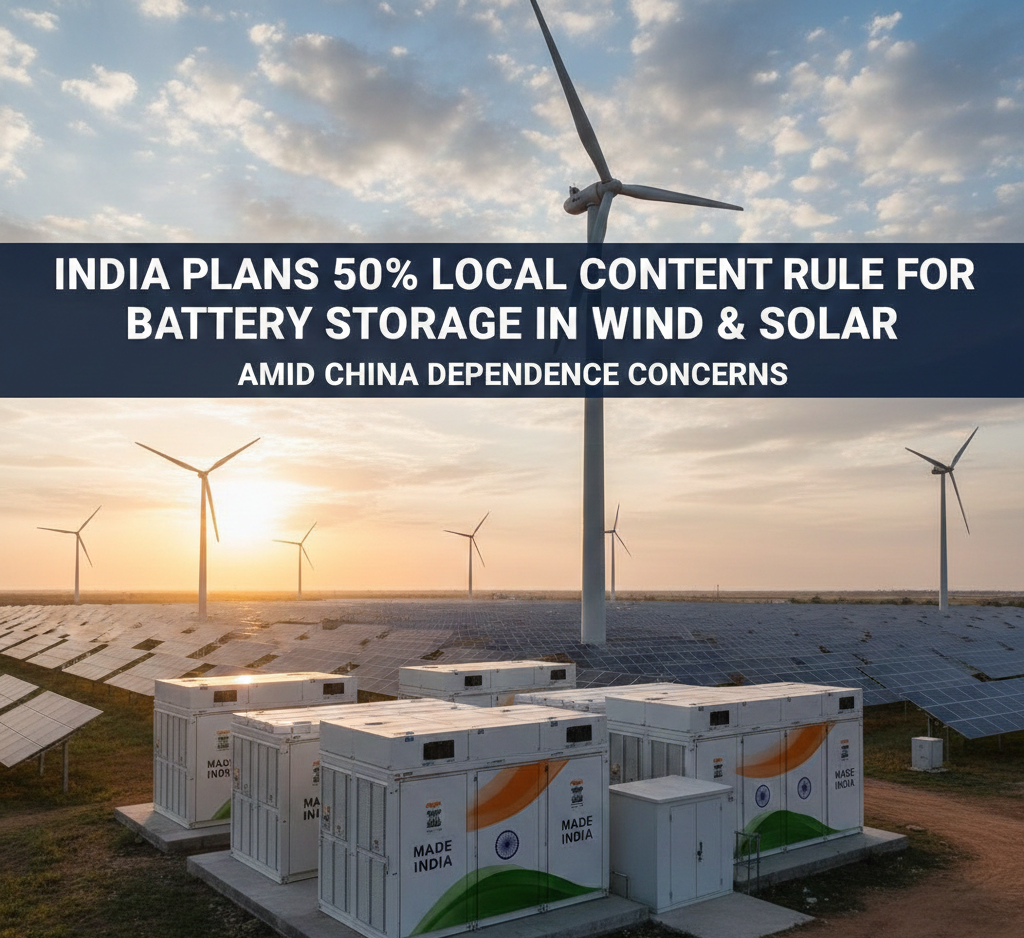
The Indian government has a major policy initiative in its view that has the potential to transform the face of the renewable energy and energy storage sector. Governments are looking into the idea to make it obligatory to have at minimum 50 percent of domestic content on components to be used in Battery Energy Storage Systems (BESS) installed together with wind and solar power plants.
Key Data & Targets
Local content should be 50 percent on the major components such as battery management systems (BMS), energy management systems (EMS), inverters, and containers, although battery cells would probably not be covered.
India wants to build approximately 47 GW of battery storage by 2032, and the investments are estimated to be 3.5 trillion.
The non-cell overhead that may fall under localisation requirements is presently contributing about 35 percent of the overall large battery storage system cost.
What is the Rush of Localisation?
The main reason behind such a policy is to lessen reliance on imported parts, especially those of China, which is the current giant in battery and battery component production worldwide.
The government officials give reasons of national security and grid reliability as there is a risk that the critical infrastructure might be subject to cyber attacks related with foreign-sourced power electronics.
Consultations with Companies in the Industry Underway
The Ministry of Power has also interacted with the public and private sector energy companies, such as NTPC Ltd, Solar Energy Corporation of India (SECI), JSW Energy, Engie, and Avaada Electro to evaluate the preparedness of the industry, as well as impractical timelines required to increase domestic production.
Authorities state that the discussions are at their initial steps and that no final decision has been arrived at.
Renewable Growth Implications
Advocates believe that localisation would enhance Indian production and generate employment and resilience of supply chains.
Critics caution that aggressive mandates would raise the expenses of projects in the short run, and could exacerbate the transition to clean energy in the event that the implementation schedules are too short.
