

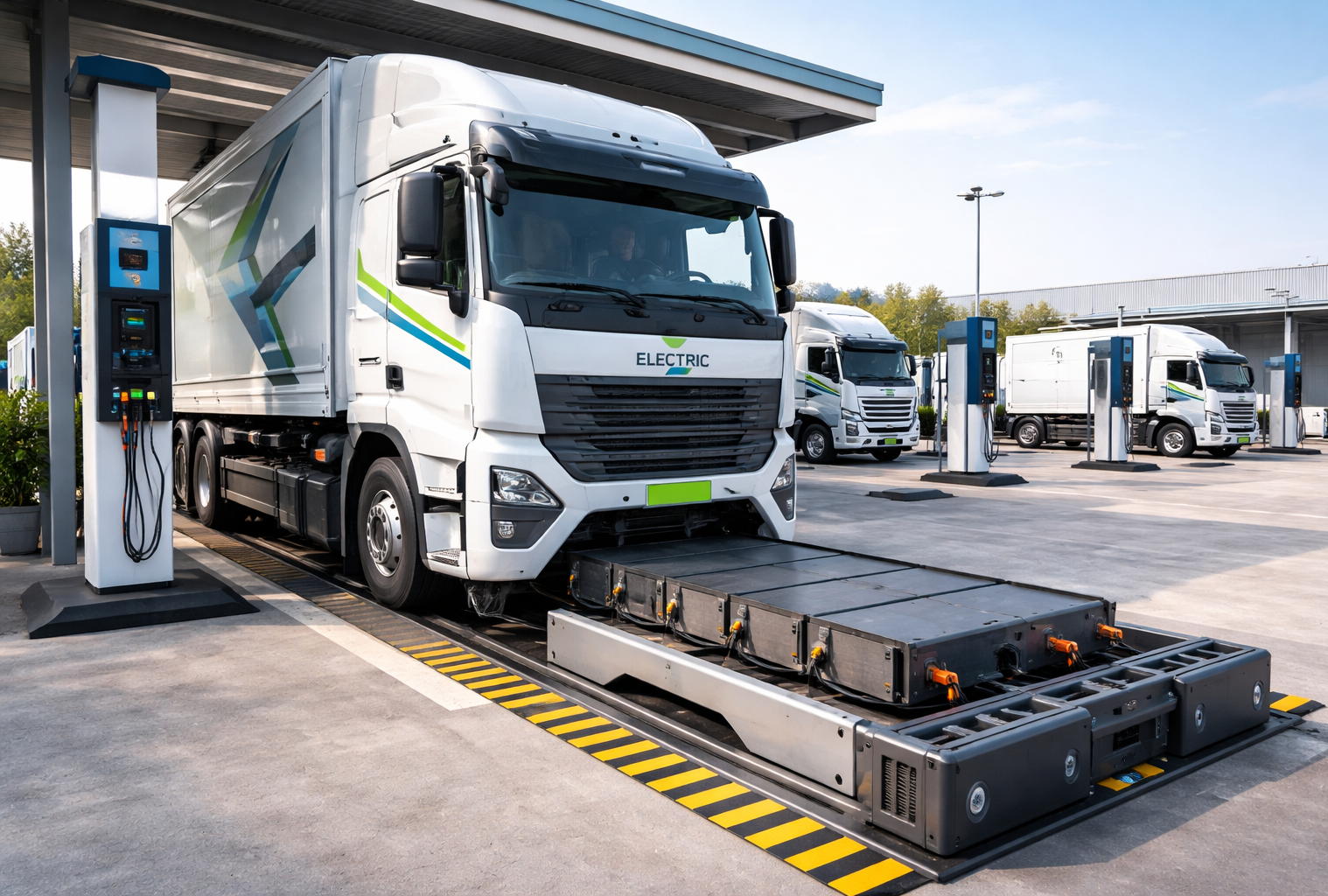
The charge of electric mobility in India is rapidly entering the commercial vehicle market, and the push of swapping batteries and electric truck charging is growing. The formation of significant partnerships in the industry, including the one between large-scale fuel producers of the state and the HPCL and electric truck manufacturer Blue Energy Motors, is establishing a network of EV truck energy sources nationwide.
The objectives of these alliances are to ensure that electric logistics is more efficient, reliable, and scalable.
Minimizing downtime in electric freight vehicles
Long charging times have also been listed among the major barriers to the adoption of electric trucks, with impacts on fleet productivity. There is a new solution on battery swapping solutions, which enables trucks to change their discharged batteries in minutes.
This greatly minimizes the time loss in performance of the vehicles and allows logistics operators to deliver on similar figures as in the case of diesel fleets.
Highway Preparation by Major Freight Routes
Within this type of partnership, battery exchange and quick recharge stations are being scheduled at HPCL fuel stations on national highways, in industrial areas, at ports, and in logistics parks.
Such places are strategically designed to make operations of high-frequency freight movement and long haul. Developers can expedite deployment by incorporating EV infrastructure into the current fuel retail networks and offer greater geographic coverage.
Flexible prices and better fleet efficiency
Swapping of batteries is also economically beneficial to fleet owners. Located battery ownership and maintenance make the vehicles cheaper at the time of purchase and help manage battery life cycles better.
The industry estimates the total operating cost can be decreased by 30 to 40 percent in the long run, as electric trucks do not need so much fuel and the cost of maintainability decreases.
Green Advantages Enhance Business Case
In addition to the economic perspective, electric trucks will play an important role in the reduction of emissions and air quality.
EV trucks, when charged using renewable-linked charging, can reduce carbon emissions significantly, particularly in urban and peri-urban logistics, where diesel pollution is a significant issue.
National EV and Climate Objectives
The growth of EV truck charging and swapping stations is in line with the overall clean energy and transport decarbonization goals in India. The adoption will continue to improve with government subsidies on battery swapping policies and more investment by the private sector.
Professionals think that these types of infrastructure alliances will be essential to transform electric trucking into a mainstream offering in the logistics industry of the expanding Indian market.
