

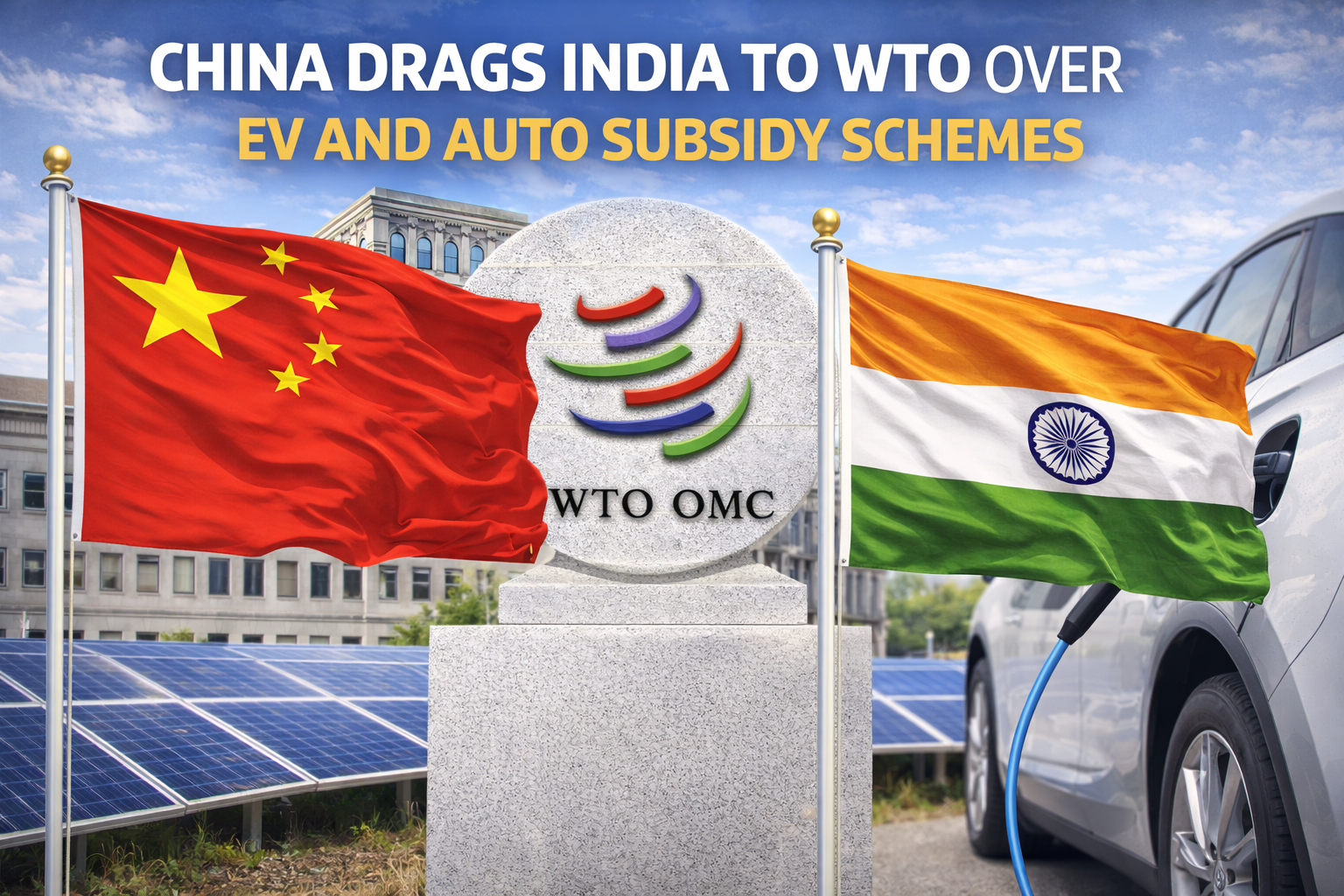
China has raised the stakes in its trade fight with India. Beijing claims India’s PLI (Production-Linked Incentive) programmes discriminate against Chinese goods and violate global trade rules. After bilateral talks went nowhere, Beijing has now asked the WTO to set up a dispute panel. The target? India’s incentive schemes for automobiles, batteries, and electric vehicles.
What Sparked This
China first filed its complaint back in October. The problem, according to Beijing, lies in how India designed its Production Linked Incentive schemes. China says the PLI programmes for advanced chemistry cell batteries, automobiles, and EVs favour domestic products over imports.
That amounts to discrimination, China argues. And it breaks WTO rules, specifically the Subsidies and Countervailing Measures Agreement and GATT 1994.
Both countries tried talking it out. Those consultations didn’t work. So China pushed the button on formal dispute proceedings.
India’s Side of Things
India hasn’t been shy about building manufacturing muscle at home. The PLI schemes are central to that push. The ACC battery storage programme and the automobile sector scheme both aim to attract global manufacturers to India and build local capabilities.
Last March, the government also cleared a separate policy to encourage EV manufacturing within the country. None of this sits well with China.
The Bigger Picture
There’s more going on here than just one trade complaint. China’s EV industry is dealing with serious overcapacity at home. Factories are churning out more cars than domestic buyers want. That means Chinese companies need foreign markets badly.
But doors are closing. The EU recently slapped tariffs on Chinese EVs. Other countries are watching closely, too. India’s massive market looks attractive, and these PLI schemes effectively shut out Chinese players.
What Happens Next
WTO panels take time. We’re looking at several months before any ruling comes through. But the move itself signals something important. Trade tensions between these two neighbours have just become much more serious.
India will likely defend its schemes as legitimate industrial policy. How the WTO sees it could shape manufacturing strategies across developing economies.
