

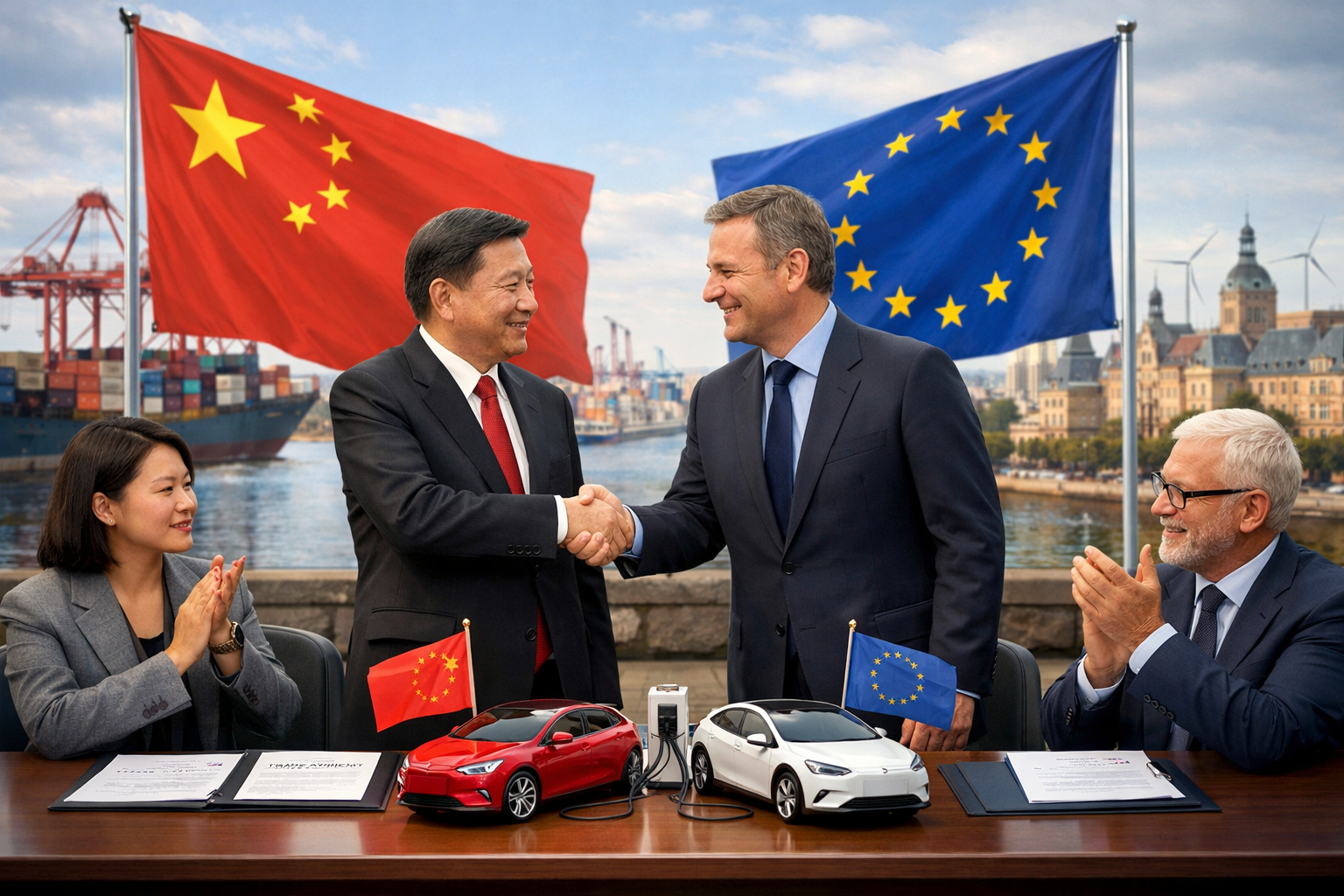
China and the European Union have reached a deal on Chinese electric-vehicle exports. The announcement came Monday from Beijing, ending months of back-and-forth between the two economic powers.
So What Did They Agree On?
The Chinese Commerce Ministry said Europe will set up pricing guidelines for Chinese carmakers selling in the bloc. Officials didn’t say whether this kills the tariffs that kicked in last year. Those duties ran as high as 35.3 percent on some Chinese brands.
Beijing sounded pleased with the outcome. According to a ministry statement, the agreement safeguards robust trade relations and ensures global commerce adheres to established regulations.
How We Got Here
Chinese EVs basically exploded onto European roads over the past few years. Imports went from $1.6 billion in 2020 to $11.5 billion just three years later. That’s a sevenfold jump.
European carmakers panicked. Brussels investigated and found that Chinese companies received help that European brands didn’t. We’re talking cheap government loans, free land for building plants, sweet tax deals, and subsidised parts from state-run suppliers.
America went nuclear on the issue. The US imposed a 100 percent tariff on Chinese electric cars last year. That pretty much killed any chance of Chinese EVs reaching American driveways.
Europe’s Tricky Spot
Here’s the thing, though. Europe actually needs those cheaper Chinese cars. The bloc promised to cut emissions by 55 percent before 2030. That’s only five years away. Getting people into electric cars fast means making them affordable.
Most EVs shipped from China to Europe aren’t even Chinese brands. Tesla and BMW both build cars there and send them west.
But companies like BYD want a bigger slice of European sales. That scared local manufacturers who couldn’t match Chinese prices.
What Comes Next
The deal marks a cooling of tensions, but questions remain. Will tariffs stay in place alongside the new pricing rules? How will European automakers respond?
For now, both sides seem content to call this progress. Whether it truly levels the playing field remains to be seen.
