

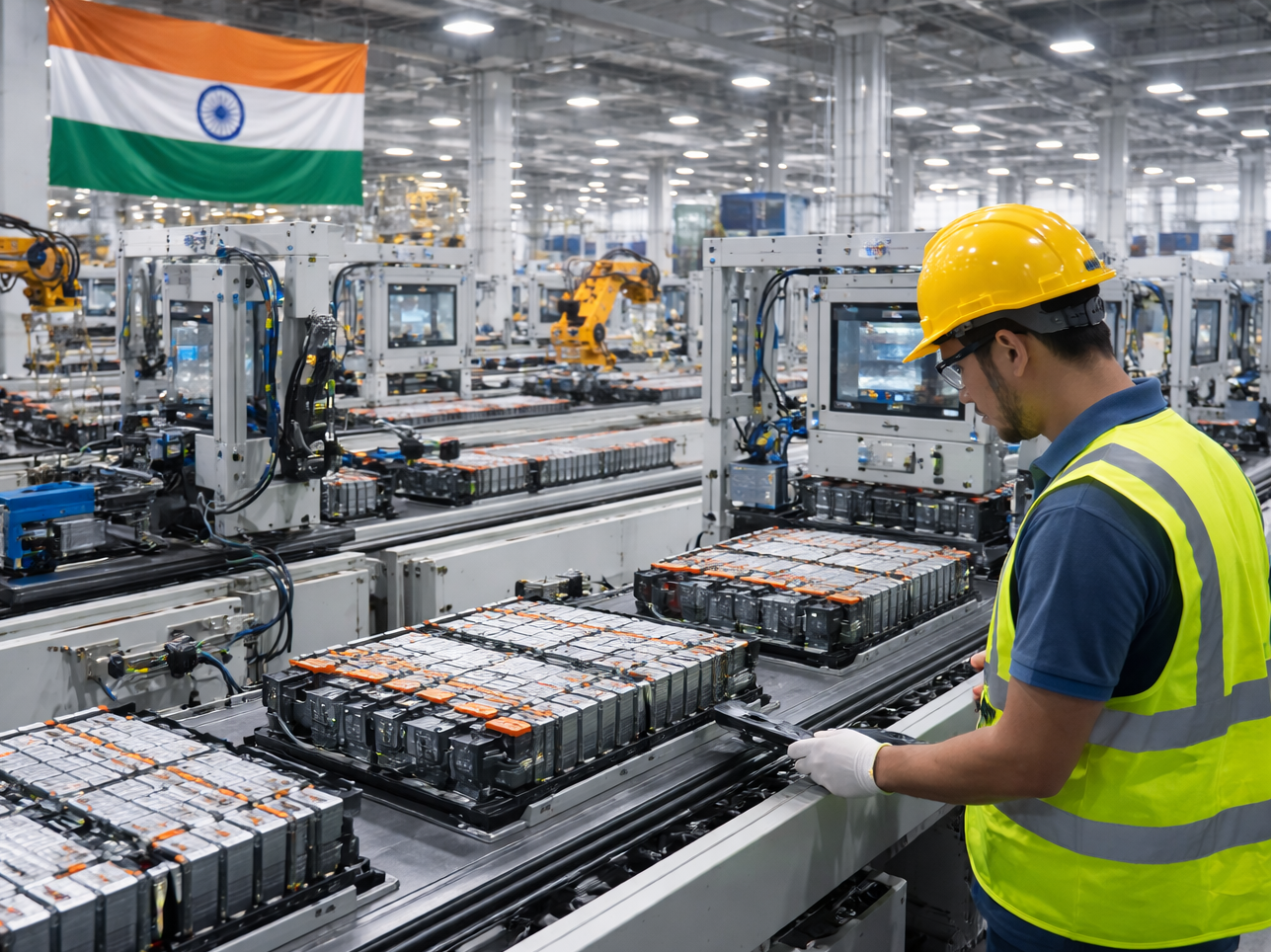
The government has suggested extending exemptions of customs duties on machinery producing EV batteries when detailing the important provisions of the Union Budget 2026. The relocation target will cut down on the cost of production and empower local EV production.
The stakeholders in the industry think that the move will have a direct effect on the pricing of electric cars in India.
To boost battery manufacturing
The exemption will reduce capital spending among the capital-intensive manufacturers, as one of the industry executives put it. The equipment that is used in producing batteries is expensive, and most of it is imported at the moment. The elimination of customs duties will render the production in the country more feasible.
Battery experts indicate that the batteries contribute to EV high costs. The reduced production cost may also be passed on to less expensive EVs to the consumers.
Fresh Investment needs promotion
According to one of the senior auto industry representatives, long-term investment depends on the stability of policies. An extended period of duty suspension is an indicator that the government is determined to develop a robust EV ecosystem.
The favorable policy environment will see manufacturers and suppliers increase capacity and invest in the development of advanced battery technologies.
Building Domestic Supply Chains
The goal is to become less dependent on imports, officials observed. India focuses on promoting the local production of batteries to enhance the EV chain and enhance energy security.
This relocation also conforms to the wider objectives of fostering manufacturing in the country and establishing skilled jobs in the clean technology industries.
Positive Industry Response
Mass EV adoption requires cost competitiveness, analysts said. Reduced battery prices may assist car manufacturers to offer EVs at prices that are relatively aggressive to unleash the adoption across classes. A lower cost of vehicles is also likely to be beneficial to fleet operators as well as commercial EV buyers.
Investing in Clean Mobility Goals
The policy specialists noted that it is a move in favor of clean mobility in India. EV adoption remains one of the elements of the strategy employed by India to cut down on emissions and reliance on fossil fuels.
Improved incentives to charge infrastructure and domestic component manufacturing are likely to be combined with the continued customs duty exemption.
Outlook Ahead
The leaders of the industry found the message of Budget 2026 as a good sign for the EV industry. Assuming that it is implemented successfully, the measure can facilitate faster investment and lower the prices of EVs as well as enhance the position of India in the global market of electric mobility.
