

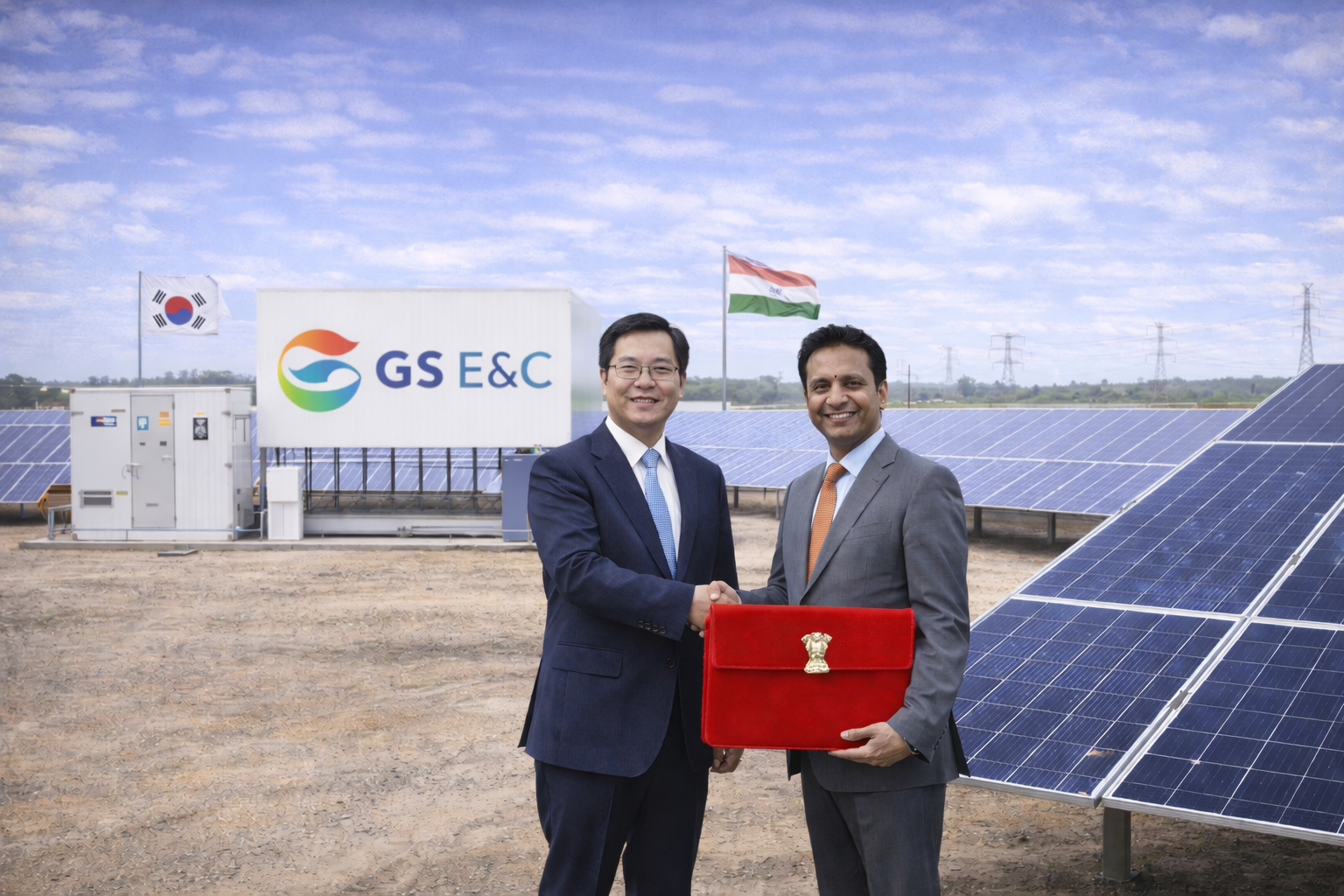
A major South Korean construction company just set foot in India’s renewable energy space. GS Engineering & Construction has completed its first solar project here, a 12.75 MWp facility in Patur, Maharashtra.
The plant started commercial operations recently, marking a new chapter for the company outside its home market.
What the Project Delivers
The Patur Solar Park covers an area roughly the size of 12 football fields. It will generate between 18 and 20 million units of electricity every year. That’s enough to keep about 6,000 homes running for twelve months.
On the environmental side, the project should reduce annual carbon emissions by around 8,000 tonnes compared to coal-based power. While the reduction may not be significant in the long run, it represents a strong start.
GS E&C built the facility and will run it going forward. They’re selling the power directly to industrial buyers.
Who Gets the Power
Here’s how the offtake works. Iljin Global India, another Korean company operating locally, will buy roughly 69% of the output. That deal runs for 25 years. A local real estate developer picks up the remaining electricity.
The project uses India’s Open Access Captive model. This setup lets companies buy power directly from the grid rather than through state utilities. It’s become popular among industrial consumers seeking cheaper, cleaner electricity.
Bigger Plans Ahead
GS E&C didn’t enter India on a whim. The company set up a local renewable energy subsidiary back in 2023 specifically for this market.
Company officials said they want to expand beyond solar into wind power as well. They’re also looking to work with other Korean businesses operating in India to build a wider customer base.
“We aim to solidify our position as a renewable energy developer in India,” the company stated. Leading in the carbon neutrality era is clearly on their agenda.
Why India Attracts Korean Players
India’s renewable energy market continues to attract foreign investors. The country needs massive amounts of clean power to meet its climate targets. That creates opportunities for developers willing to navigate local regulations and grid challenges.
For GS E&C, this Maharashtra project is a test case. If it performs well, expect more Korean solar and wind farms popping up across the country in the coming years.
