

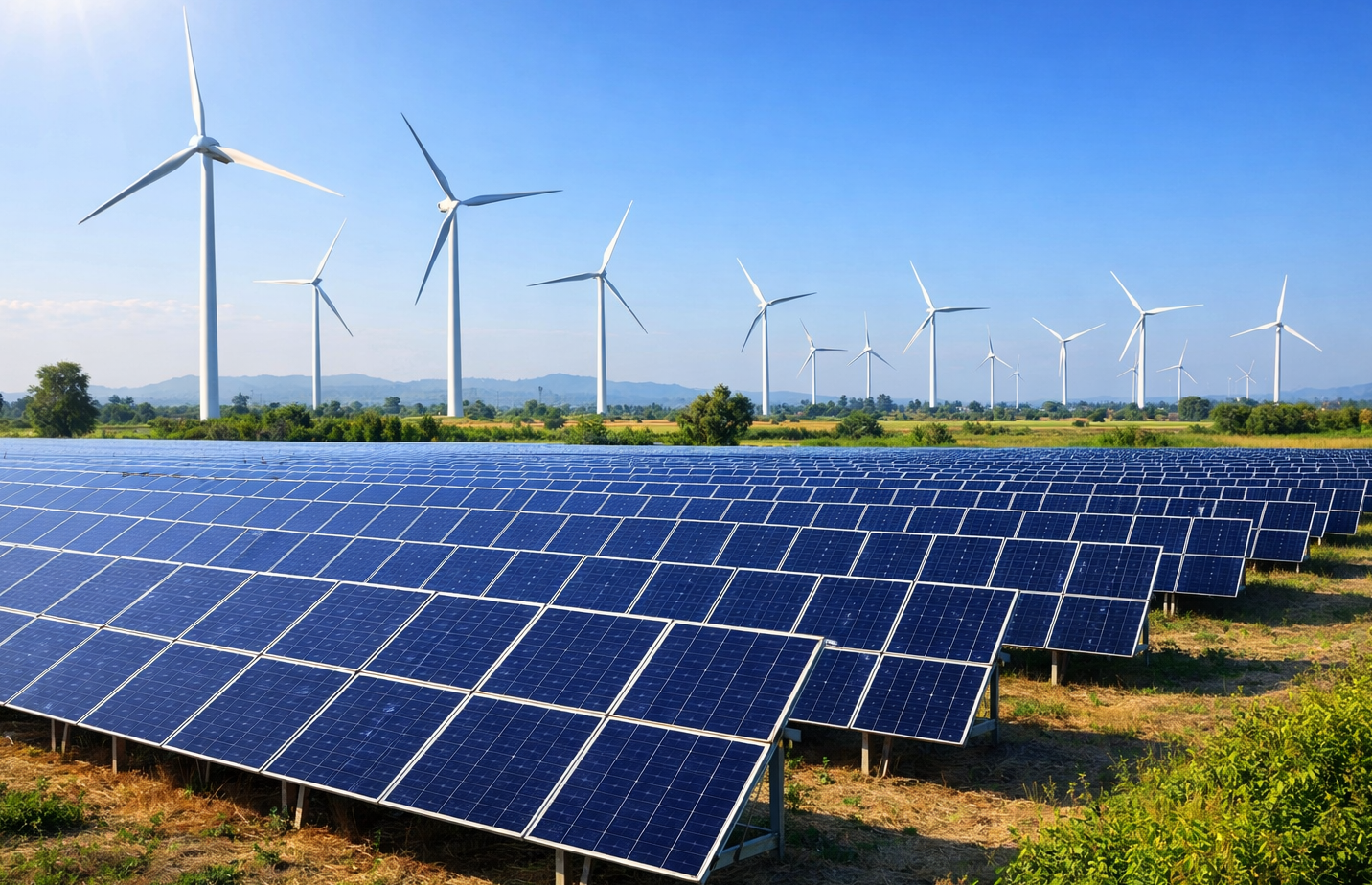
India made a substantial step in changing its energy transition with passing 190 GW of installed renewable energy capacity, which supports its status as one of the largest clean energy markets in the world. Its potential comprises solar, wind, large hydro, and bioenergy, and solar energy has made the greatest portion of the additions.
Solar power becomes the growth model
India has continued to record a rising momentum in its renewable development, aided by declining tariffs, enhanced module efficiency, and policy support.
Bandwidth capacity has been boosted by utility-scale solar stations in Rajasthan and Gujarat, as well as by increasing numbers of rooftop setups as part of government initiatives.
Solar by itself will add over 90 GW, and therefore it is a powerhouse of the Indian renewable portfolio.
Workforce of wind, hydro, and bioenergy
Even though solar is leading in the new capacity, wind power is still a very essential factor, especially in Tamil Nadu, Gujarat, and Karnataka.
In the meantime, the large hydro projects remain able to offer grid stability and storage-like features, whereas bioenergy projects serve the objectives of decentralized power generation and the purposes of waste-to-energy.
Policies by governments active force
The milestone represents the consistent central governmental policy aimed at such actions as the transparent auctions, the long-term power purchase agreements, and incentives to the domestic manufacturing.
Programs like the Production Linked Incentive (PLI) scheme, renewable energy corridors, and green open-access rules have made the investor confidence even stronger.
On Track to 500 GW Non-Fossil Target by 2030
India continues to be on its path towards its ambitious goal of having a non-fossil fuel capacity of 500 GW by 2030 due to its sustained growth. A major promise she gave in her climate commitments.
This goal encompasses both renewable energy and nuclear energy, and it is the core of the Indian policy of decreasing carbon emissions besides the eventuation of economic growth.
Difficulties and the Future of the Road
Although this has been achieved, there are still challenges such as land acquisition, gaps in transmission infrastructure, and grid integration.
But with the increasing attention to battery energy storage systems and hybrid renewable projects, these problems will be overcome and result in stable and 24/7 green power.
