

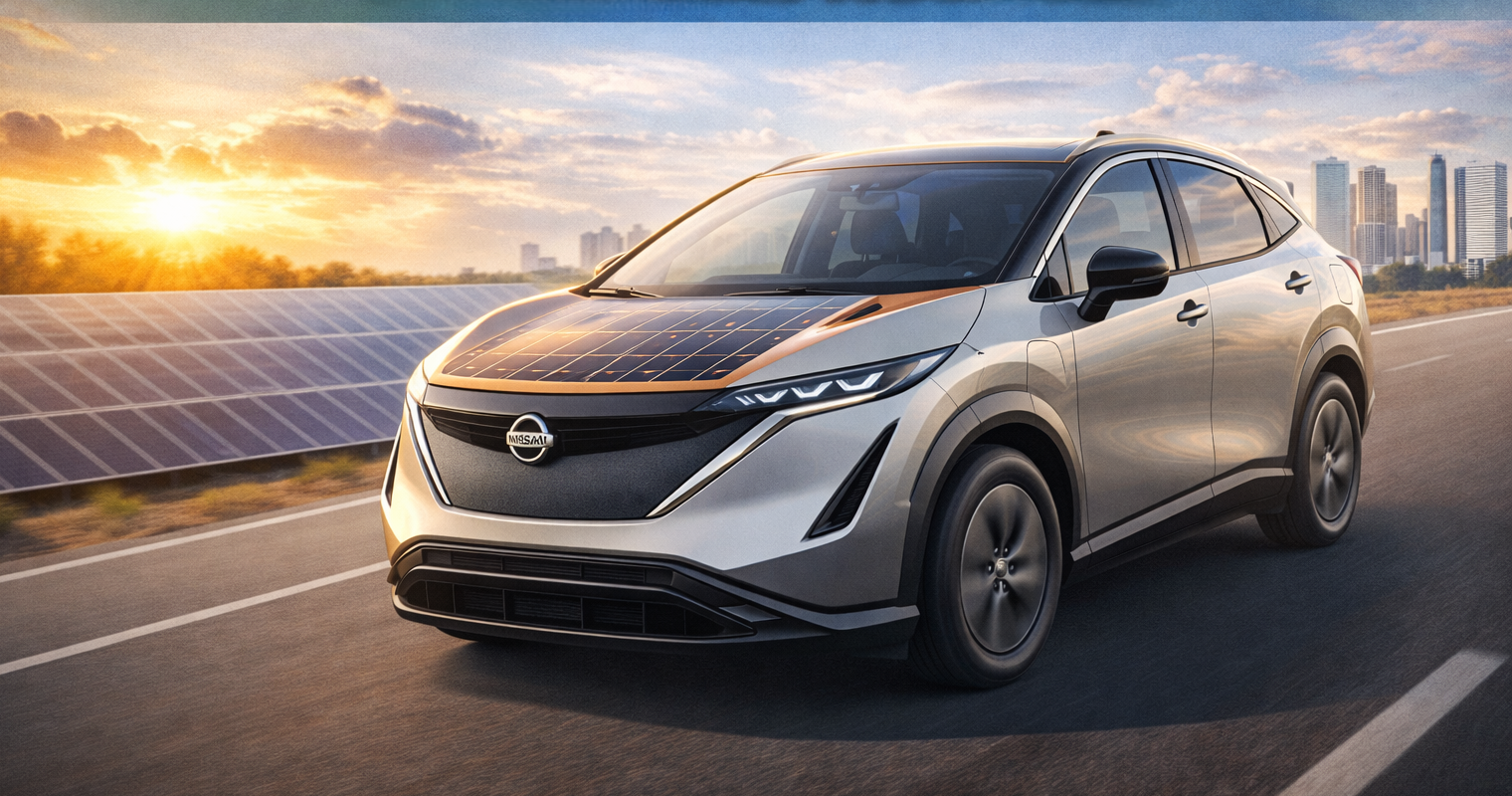
A move in case of electric mobility in the next generation was made by Nissan when it launched a solar-powered edition of its Ariya electric SUV. The concept car incorporates solar panels into the car body, and as a result, the car can produce electricity when parked and, at least, when moving with the assistance of some conditions.
The growth pinpoints the variety of ways in which auto manufacturers are investigating the renewable energy integration beyond standard charging infrastructure.
The working process of solar technology
The Ariya has high-efficiency photovoltaic panels on the roof and upper parts of the body, and it is solar-powered. The sun is transformed into electricity using these panels and supplied directly into the battery system of the vehicle.
Nissan indicates that the technology will be able to reduce charging requirements, charging auxiliary systems, and creating incremental range as it gets older.
Although the solar panels have not been made to eliminate plug-in charging completely, they can decrease the use of the grid, particularly on daily urban commutes.
During sunny days, the system would be able to create sufficient energy that would accommodate the short trips or balance the energy consumed by climate control and other systems in the cars.
Benefits for EV Owners
Solar technology that is an in-car feature has its benefits. It will help minimize the occurrence of charging, minimize the operating expenses, and improve convenience to users who are not able to access charging stations regularly. It also enhances efficiency of energy as it harnesses renewable energy, which would otherwise remain inoperable at the time of parking.
To fleet operators and long-term owners, the technology may be used to lengthen battery life through lessening deep discharge cycles.
A long-term EV strategy of Nissan
The solar Ariya is the idea that Nissan has placed within a larger strategy of integrating electric mobility into the renewable energy offerings. The company is still battering on battery efficiency, energy management software, and vehicle-to-grid technologies to facilitate cleaner transport ecosystems.
The strategists in the industry consider solar-assisted EVs as an accessory innovation and not as a separate solution. They are optimistic, however, that these developments can be relevant to enhancing sustainability and resiliency in mobility systems of the future.
Looking Ahead
With the quickening pace of EV implementation in a worldwide scope, anti-dependency technologies in charging and self-generation will become significant. The solar-powered Ariya by Nissan is an indication that one day, electric cars will not only be consumers of clean energy, but they are also going to be involved in the production of renewable energy resources.
