

India’s electric mobility ecosystem may be set for a major policy shift as a push from the Prime Minister’s Office (PMO) has prompted the government to reconsider the eligibility framework of the Automobile Production Linked Incentive (PLI) scheme.
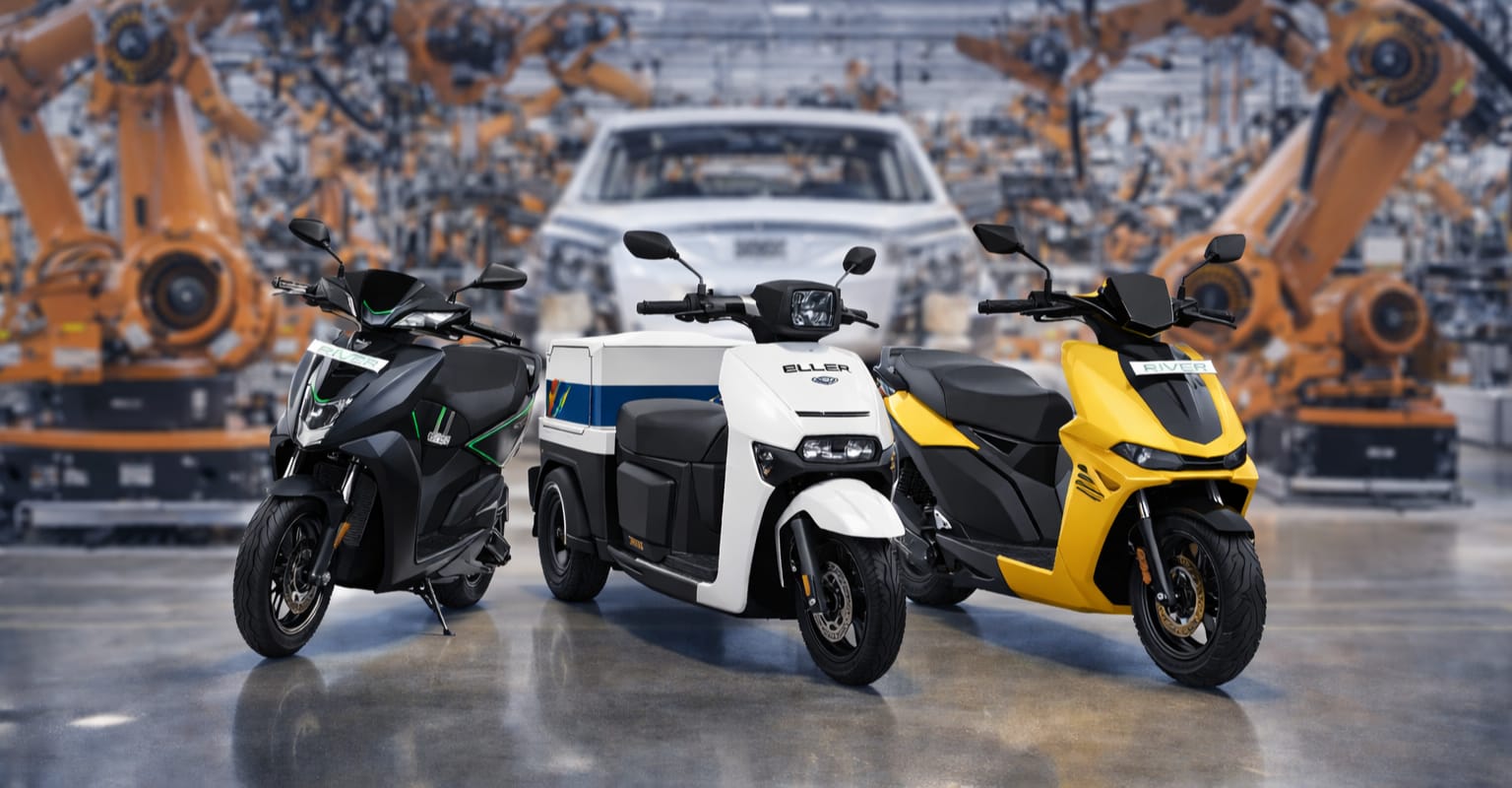
Interestingly, the shift would enable the auto PLI scheme to key EV startup firms like Ather Energy, Euler Motors, and River Mobility that previously did not have access to the scheme, as it has some of the strictest qualification standards.
The omission of EV startups in the past
The auto PLI plan aimed to promote the production of new technological automobiles within the country, and much emphasis was placed on the amount, presence of investment capabilities, and revenue limits.
Nevertheless, most new-age EV manufacturers, even with impressive technology strengths and growing popularity, were unable to satisfy the high turnover rates and net-worth requirements.
Due to this, some startups in the rapidly growing EV sector were still not included in the incentive system despite their important contribution to the speed of EV adoption.
Consultations with the government become popular
The Ministry of Heavy Industries has also embarked on consultations with industry players, including the automotive bodies and manufacturers of EVs, following the intervention of the PMO.
In the meantime, there is a debate as to whether or not to loosen the current requirements or to establish a type of window of the PLI scheme dedicated exclusively to EV startups. Notably, any modification will aim at balancing the inclusion of startups with the interests of previous automakers that are already involved in the scheme.
The possible implication on the EV production ecosystem
With its implementation, availability to more PLI incentives would potentially be a great boost to the ecosystem of EV startups. Specifically, such companies as Ather, Euler, and River might enjoy the advantages of financial assistance related to production and the ability to expand the capacity quicker, localize more, and also become less dependent on imported elements.
In turn, this may increase the competitiveness in terms of cost and drive innovation expediency in the fields of electric two-wheelers and commercial EVs.
Alignment with India’s Green Mobility Goals
Strategically, the development of the PLI framework will be in line with the clean mobility and net-zero objectives of India. Additionally, funding both startups and established manufacturers would lead to a distribution of a stronger and more consistent EV supply system.
Thus, policymakers view startup inclusion as a means of competition and bettering the Indian role as an EV-manufacturing center in the world.
What Lies Ahead
Although there is yet to be a final announcement, the general trend is that the push led by the PMO is an important move towards more inclusive EV policies. In the future, this consensus in the industry and governmental approval might prove to be the key in shaping the official acceptance of EV startups as organizational members of the Auto PLI scheme, which could redefine the future of India with regard to electric cars.
