

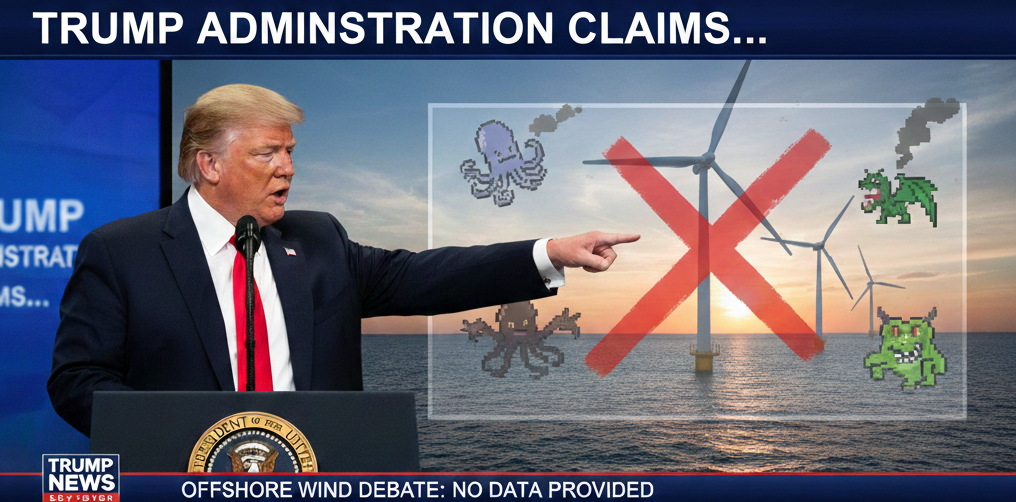
Trump administration has again directed its ire towards the offshore wind energy, with the claim that the large-scale wind projects are a danger to national security, marine ecosystem, and coastal communities. These fears have been echoed by senior officials in recent statements, which demonstrates that offshore wind development continues to be viewed with a sense of skepticism. Nevertheless, the administration has not come up with tangible evidence and explanations to back up its assertions despite good rhetoric.
The issues of national security remain ambiguous.
The main reasons, which the administration uses to argue against offshore wind farms, is that these farms may disrupt national security especially their military radar and surveillance equipment. Authorities have proposed that radar transmissions by the Navy and other defense departments can be interfered with by turbine constructions. However, no technical evaluations and secret briefings have been published to help explain the character or magnitude of these said threats and this leaves analysts wondering about the validity of the assertion.
Environmental Hazards Quoted Unsupported.
Another point that has been presented by the administration is that off shore wind poses a threat to the marine life, which includes the whales, fish population as well as the seabirds. Even though the protection of the environment has been brought out as one of the reasons why the operations of offshore wind farms should be drawn under more scrutiny, federal agencies have not released research that directly links strong ecological damages to offshore wind operations. Environmental activists observe that the large-scale impact surveys are already compulsory and that current studies tend to conclude that offshore wind is not as harmful as fossil energy sources.
Industry Counterattacks Spies.
The developers and industry associations have fiercely opposed the claims of the administration terming them as misguided and politically inclined. They contend that offshore wind projects are thoroughly reviewed by the federal government involving various agencies that include the department of defense. According to the industry leaders, unproven statements can threaten the investors and slow the development of a sector that is perceived as a key to clean energy transition.
Offshore Wind is Shrouded in Policy Uncertainty.
This ambiguity on the concerns of the administration has caused confusion to states and those planning offshore wind among the developers. Some states along the coasts have been investing in the wind infrastructure as part of the climate and economic policies. Analysts warn such uncertainty on the federal formula, lacking clear-cut arguments, can postpone projects, raise the costs, and undermine the leading role of the United States in the world wind market of offshore wind.
Controversy becomes a Widening Energy Schism.
The offshore wind debate points to a greater rift in the US energy policy. Even though the Trump administration has supported the use of fossil fuels and energy dominance, a majority of states and individual investors consider offshore wind as a key to decarbonization and employment. The debate on offshore wind would probably be more of a political rather than evidence-based one before the administration clarifies the threat.
