

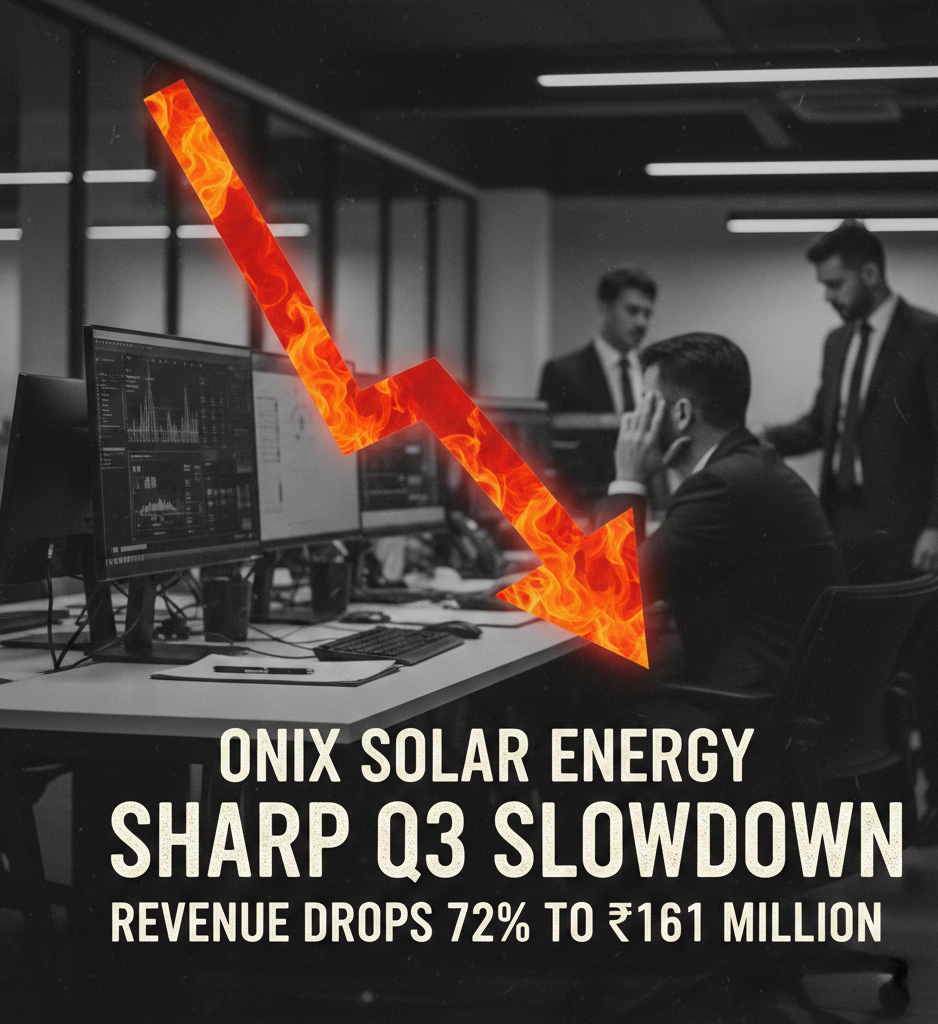
Onix Solar Energy Ltd has recorded a significant reduction in revenue of 72 percent year on year to the third quarter (Q3), with an overall revenue of 161 million, reflecting operation difficulties of small solar EPC firms in the competitive renewable energy sector.
Slowdown in execution era affects revenue.
The massive decline in revenues was largely explained by the delays in launching the projects, the decrease in the order inflow, and the reserved expenditures of commercial and industrial (C&I) clients. A number of projects that were to be completed in the quarter were deferred to other quarters hence having a direct impact on revenue recognition.
Players in the industry also observe that the delay in payments and stricter requirements in the financing conditions have further cut down on the size of the mid-sized solar companies to an extent that it can no longer effectively scale its operations.
Defining the margin pressure in solar EPC sector would entail examining various sectors that influence the margin pressure within the solar EPC industry.
The performance of Onix Solar Energy can be viewed as the general trends in the Indian solar EPC market, where intense price competition and increased costs of operations are continuing to maintain pressure on margins. Major participants are taking over utility-scale projects and smaller companies are forced to fight hard in rooftop and distributed solar markets.
Cost optimisation is a management concentration that has been developed by the company.
The company responded to this poor Q3 by saying that it is working on optimising costs, operational efficiency, and limited bidding to enhance a financially stable state. Onix Solar Energy also has a prospect in rooftop solar and hybrid energy system, and solar-plus-storage which are predicted to be in more demand in the future.
Outlook: Remains Cautiously Optimistic.
Although the rate of renewable energy development in India has slowed down in the short term, the country still enjoys excellent policy support and the country has set a target of 500 GW of non-fossil fuel capacity by 2030. The company believes that things will improve in the next few quarters due to the resumption of projects that have been delayed and also because of awarding of new tenders.
Analysts think that the recovery of Onix Solar Energy will be based on the improved management of liquidity, speedy implementation of the project, and consistent implementation of the policy, especially at the state level.
