

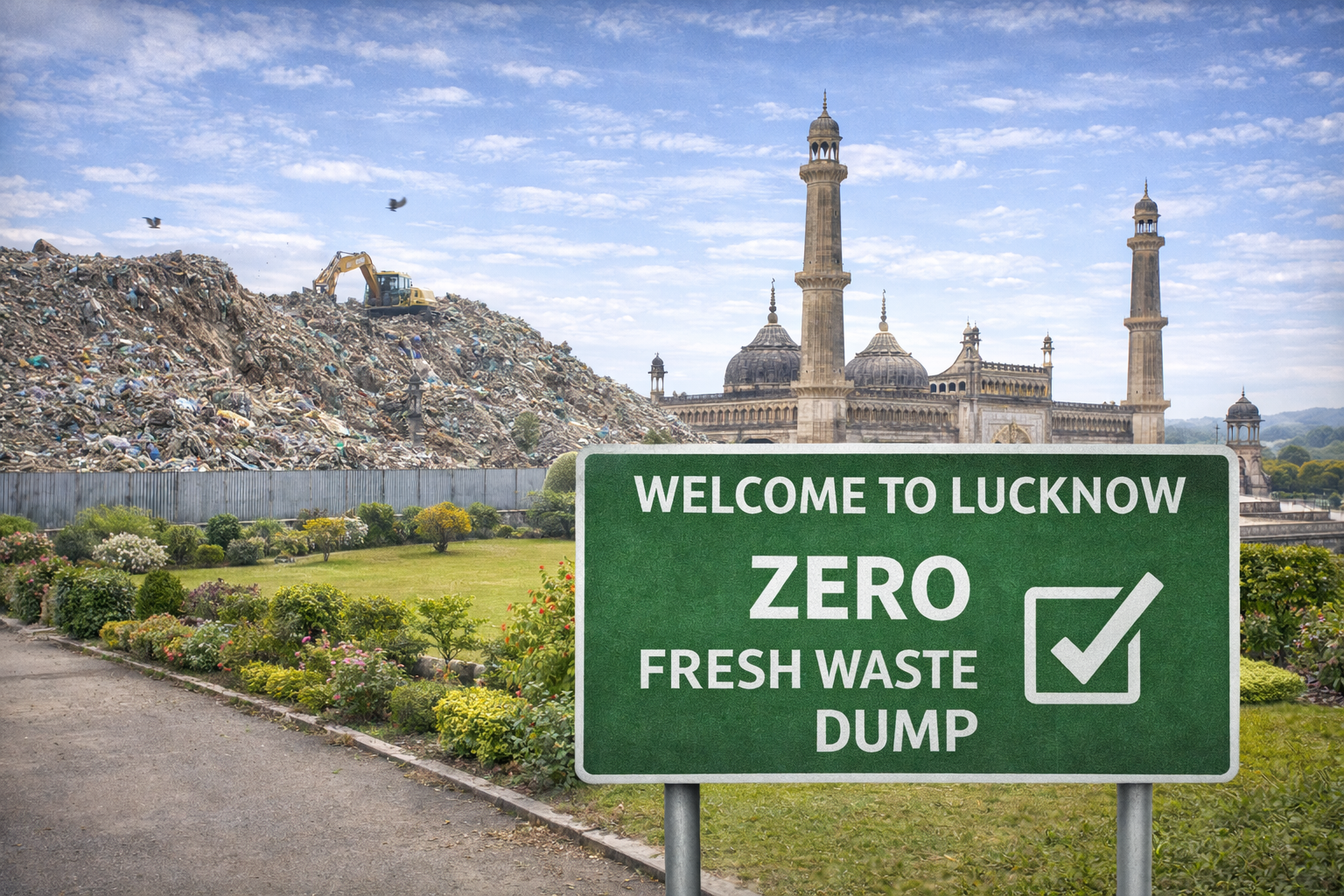
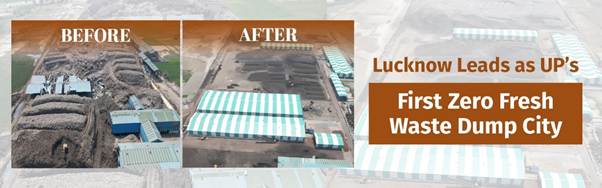
Lucknow has hit a big milestone. The city is now the first in Uttar Pradesh to process all its fresh municipal waste scientifically. This comes after the launch of the new Shivari Solid Waste Management Plant.
New Plant Changes the Game
The Shivari facility can handle 700 metric tonnes of waste every day. Lucknow already had two similar plants running. Now with all three working together, the city can process over 2,100 metric tonnes daily. That covers everything Lucknow generates.
For a city of nearly 40 lakh people and 7.5 lakh businesses, such an accomplishment is no small feat. The Lucknow Municipal Corporation has been working with Bhumi Green Energy to make this happen under the Swachh Bharat Mission-Urban.
How the System Works
The process is pretty straightforward. Waste gets split into two parts. About 55% is organic stuff that turns into compost and biogas. The remaining 45% is inorganic material. This substance is either recycled or used as refuse-derived fuel in cement and paper factories.
Door-to-door collection now reaches 96.53% of households. More than 70% of residents separate their waste at home before pickup.
Cleaning Up Old Garbage Too
The city had a mountain of old waste to deal with. Out of 18.5 lakh metric tonnes of legacy garbage, around 12.86 lakh metric tonnes have been processed so far. This effort freed up over 25 acres of land at the dump site.
Around 2.27 lakh metric tonnes of RDF (refuse-derived fuel) have already been sent to industries across India. Other materials, such as biosoil and construction debris, are being used to fill low-lying areas.
What Comes Next
LMC is not stopping here. A 15 MW waste-to-energy plant is planned for Shivari. It will use 1,000 to 1,200 metric tonnes of RDF daily to generate electricity. This will also reduce transport costs, since the cement factories are about 500 km away.
Lucknow’s approach shows how cities can turn waste into resources instead of just dumping it.
