

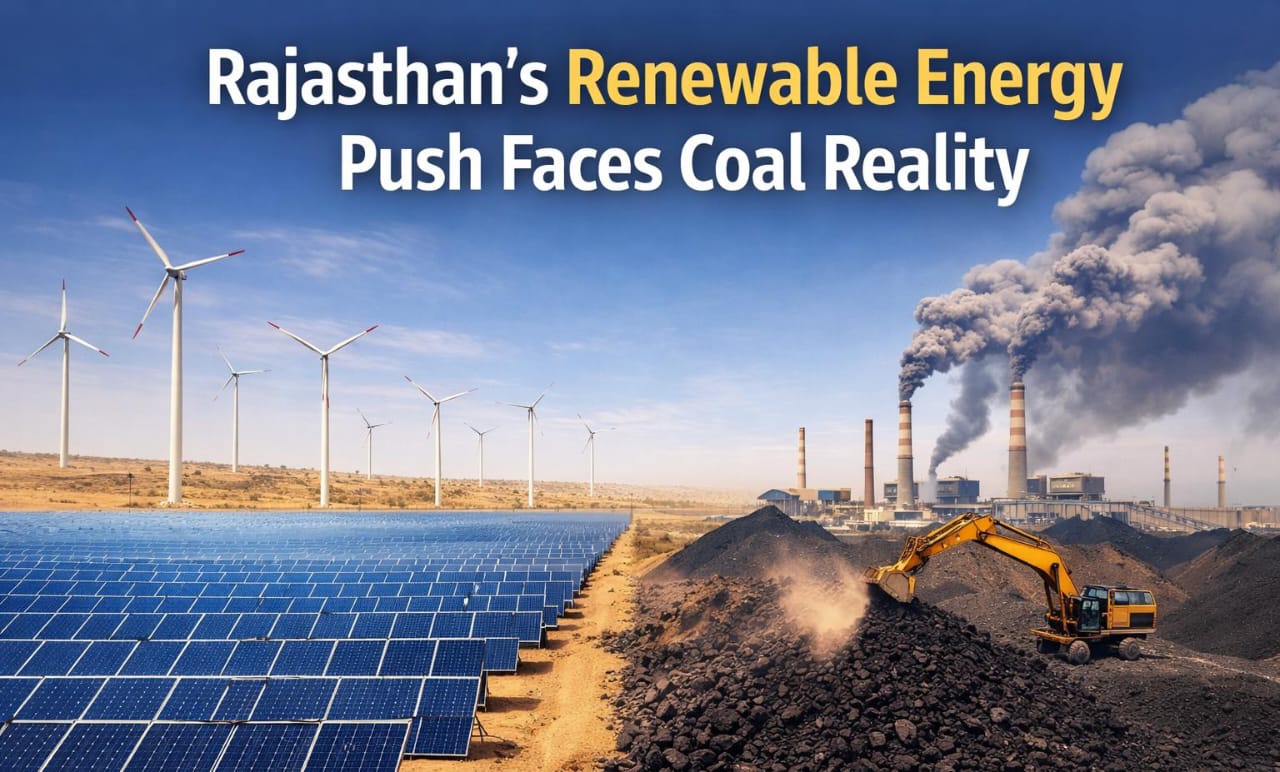
Rajasthan has become the leading state in the production of renewable energy in India, with the production of solar and wind power consuming almost 70 percent of the mix of electricity. The large deserts and high solar radiance make the state one of the largest-scale solar park locations, and wind energy is contributing to its clean energy portfolio. This leadership has made Rajasthan an example of how India is going to go green with power. energy is
The Coal Conundrum
Though this has improved, the Central Electricity Authority (CEA) has estimated that Rajasthan will still need another 4400 MW of coal-based capacity by 2036. This is because of the inability of the existing technologies in renewable generation and storage.
Although renewables will be able to serve the day and the fair-weather demand, they find it difficult to provide continuous reliability, especially during the evening as the sun decreases its production. Uneasy weather with low winds, which weaken turbine production.
Long cloudy or monsoon weather, which affects the efficiency of the sun.
Despite the fact that coal is a carbon-intensive source, it remains a solid power source that can stabilize the grid at the time of renewable supply shortage.
Storage and Reliability Problems
There is ongoing development of battery storage and pumped hydro projects to supplement renewable generation, but these are not yet adequately developed. In the present storage systems, the supply of 24/7 continuous supply is still not available to the extent that will be needed to cater to the rising industrial and residential demand of Rajasthan.
Analysts observe that even though penetration of renewables is good, grid stability and reliability are issues of concern. Although coal plants have negative environmental effects, they serve as the baseload and the backup power, which ensure there are no blackouts.
Striking a Balance between Growth and Sustainability
In Rajasthan, the electricity demand is projected to increase drastically in the coming 10 years, and it will be due to:
- Increased the industrial centers in industries such as cement, textiles, and mining.
- Emerging urbanization and domestic demand.
- The state aspect as an exporter of power to other states.
To fulfill this demand, there should be a delicate balance between green ambitions and energy security. The problem that policymakers have been struggling with is how to increase renewable power and keep coal as a transitional power, rather than a permanent addiction.
National Context
The wider energy plan of India projects having 500 GW of non-fossil fuel capacity by 2030, but coal is still represented as more than 70 percent of the national electricity production. The case of Rajasthan is connected with the dilemma of the whole country: how to get renewable energy adopted faster and still have a stable supply in a rapidly growing economy.
Key Takeaway
The renewable hegemony in Rajasthan is underrated, yet the fact that this state depends on coal to stabilize the situation highlights the complicated nature of the energy transition. Until the storage technologies have matured and the grid implementations grow, coal will also be a needed but rather controversial component of the Rajasthan power mix.
