

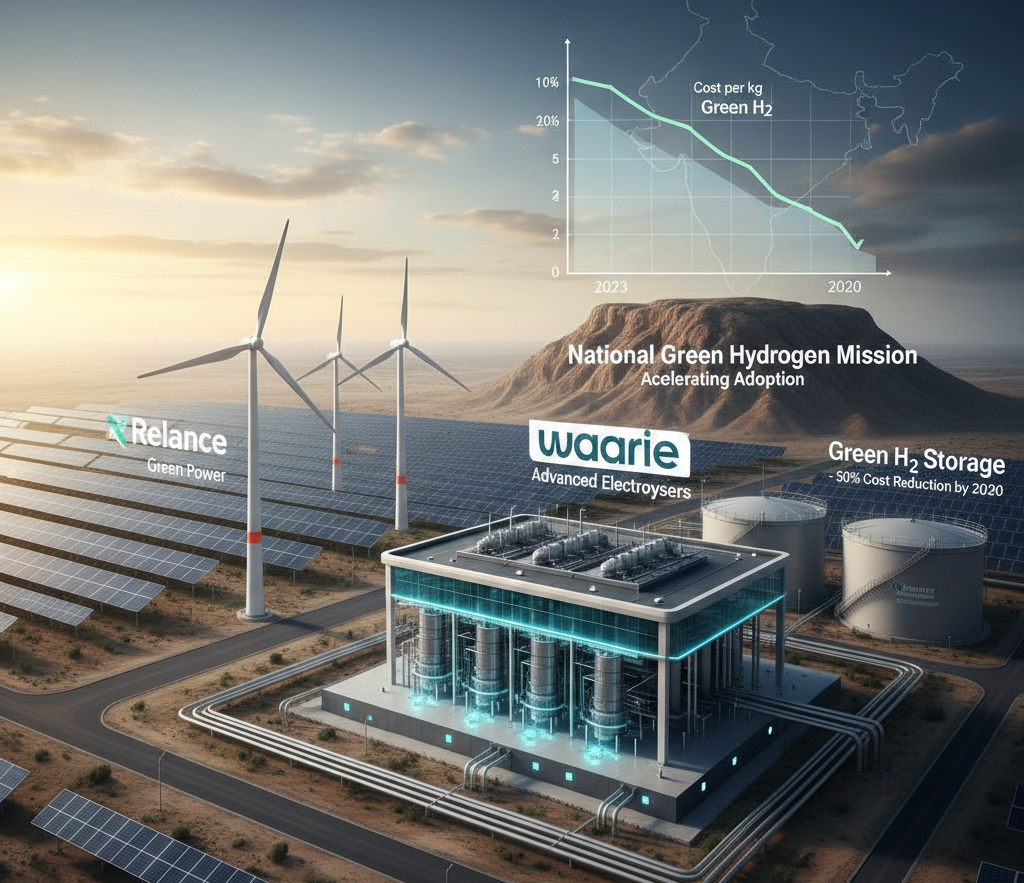
The green hydrogen prospects in India have been on the rise, with large energy conglomerates like Reliance Industries and Waaree stepping up their investment in its production capacity. These firms are becoming the front runners of the clean energy shift in the country, with their objectives being in full overlap with the National Green Hydrogen Mission.
Industry reactions
Reliance Industries has implemented the plans to construct an all-in-one green energy ecosystem encompassing renewable energy production, production of electrolyzers, and massive production of hydrogen fuel. Waaree, already in the circles of manufacturing solar energy at a large scale, is currently expanding to green hydrogen, leveraging its experience in providing renewable infrastructure and energy storage solutions. Their combined work is an indisputable sign of change in pilot projects to industrialization.
Costs Set to Drop Nearly 50% by 2030
The swift green hydrogen cost reduction is one of the largest motivators for adoption. According to industry estimates, production expenses are expected to reduce by almost half by 2030, and green hydrogen is projected to become more competitive with fossil fuel-powered appliances.
This is a cost-saving based on two important aspects. To start with, the cost of renewable electricity, solar and wind power in particular, is still reducing as the capacity keeps increasing in India. Second, economies of scale, domestic production, and the technology revolution are making the electrolyzer technology cheaper and more efficient.
Reliance and other companies have embarked on mass production of indigenous electrolyzers, and this will not only decrease dependency on imports but also the cost of capital.
The Adoption of Industry Picks Up
With the downward trend of costs, the green hydrogen will be more widely adopted in sectors that are difficult to abate. The industries that would be the most demanding include steel, fertilizers, refining, chemicals, and heavy transport industries, as they are on the quest for cleaner options in order to achieve targets of decarbonization.
The government plans to establish firm demand by using incentives and policy support and export-oriented approaches under the National Green Hydrogen Mission. The mission also persuades the public-private collaboration, which allows businesspeople such as those at Reliance and Waaree to grow rapidly and establish long-term supply chains.
Strategic Boost of Energy Security
In addition to the reduction of emissions, green hydrogen also presents India with an energy security edge. The substitution of the imported fossil fuels with the domestically produced clean hydrogen would enable the country to save the amount of money it spends on importing energy and protecting itself against the international price fluctuations.
India’s Clean Energy Future
As industry leaders are pushing forward scale and the cost of green hydrogen is dropping at an unprecedented pace, green hydrogen is shifting towards reality. The aggressive growth of Reliance and Waaree is a turning point in the energy situation in India, as it brought India a step closer to the secular world of clean energy, which is low-carbon and self-sufficient.
