

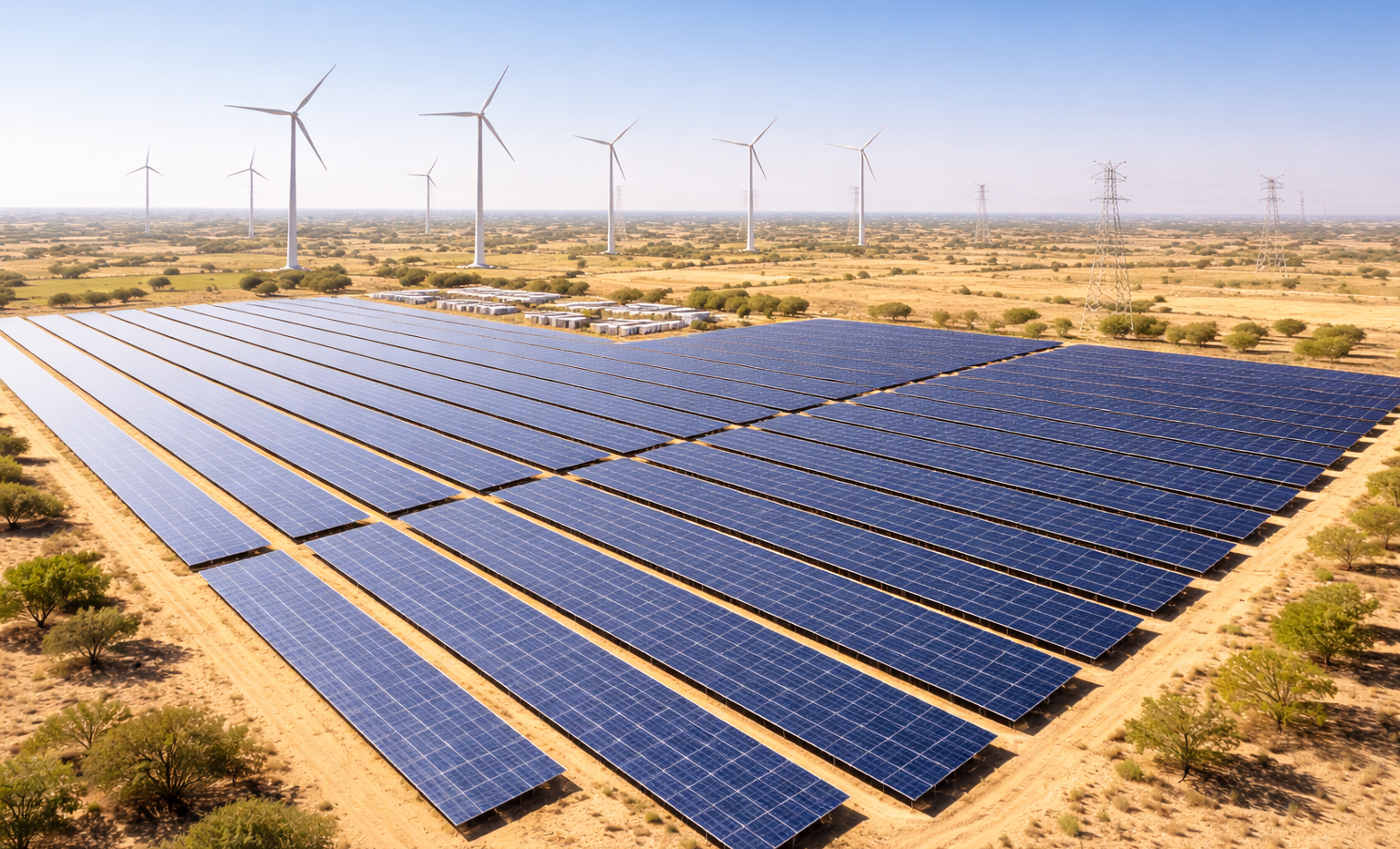
The state of Rajasthan is also reaching its clean energy goals, with an estimated 50 gigawatt (GW) project pipeline in progress to bring the state closer to its goals of 115 GW by 2030. This pipeline indicates that in 2026, the developers are showing strong project commitment and increasing investor confidence towards the region’s renewable potential.
Solar power is in the pipeline
Most of the current projects in Rajasthan are the solar power installations. The state receives a lot of sunshine with vast areas of open land, hence making it one of the largest solar markets in India.
The planned solar projects are, in most cases, utility-scale projects of over 100 megawatts (MW) and produce low-cost clean electricity for the grids of both local and interstate buyers.
Growth is supplemented by wind and hybrid projects
Besides solar, the Rajasthan pipeline reserves various wind projects and solar-wind mixes. Hybrid constructions, where wind turbines are combined with solar panels, are getting more popular with developers as they can produce power more reliably during the day.
Battery storage systems have also been incorporated in such projects to stabilize the grid, as well as to improve the reliability of supply.
Policy Support and Availability of Land
The policies of the state government have been major contributors to this growth. Rajasthan is providing simplified approvals, open auctions, and inducements towards renewable developers.
The government has also demarcated renewable energy zones as well as made land available by the proactive planning and minimized the number of days a project takes to reach its construction and commissioning.
Infrastructure and Strengthening of Grids
Rajasthan has also worked on the enhancement of the transmission infrastructure to accommodate huge additions of renewable energy. Developing a portfolio of projects for national and regional grids, new high-capacity transmission lines are being installed together with upgraded substations. The upgrades are essential because the state will be growing towards its 2030 clean energy objectives.
Investment and Job Creation
The piping with a capacity of about 50 GW has drawn loose change investments by both local and foreign companies. Analysts believe this momentum will generate thousands of construction, operations, and maintenance jobs. The renewable supply chain is also making local businesses easier, as people are enjoying the benefits of doing more business.
Toward the 2030 Target
Having slightly more than half its 115 GW target under serious consideration, Rajasthan will develop into a leader in the Indian clean energy transition.
The push to surpass its renewable energy targets by 2030 in Rajasthan is being aided by continued policy support, improvement of infrastructure, and healthy market interest in 2026.
