

Making green hydrogen has always been expensive. That’s about to change.
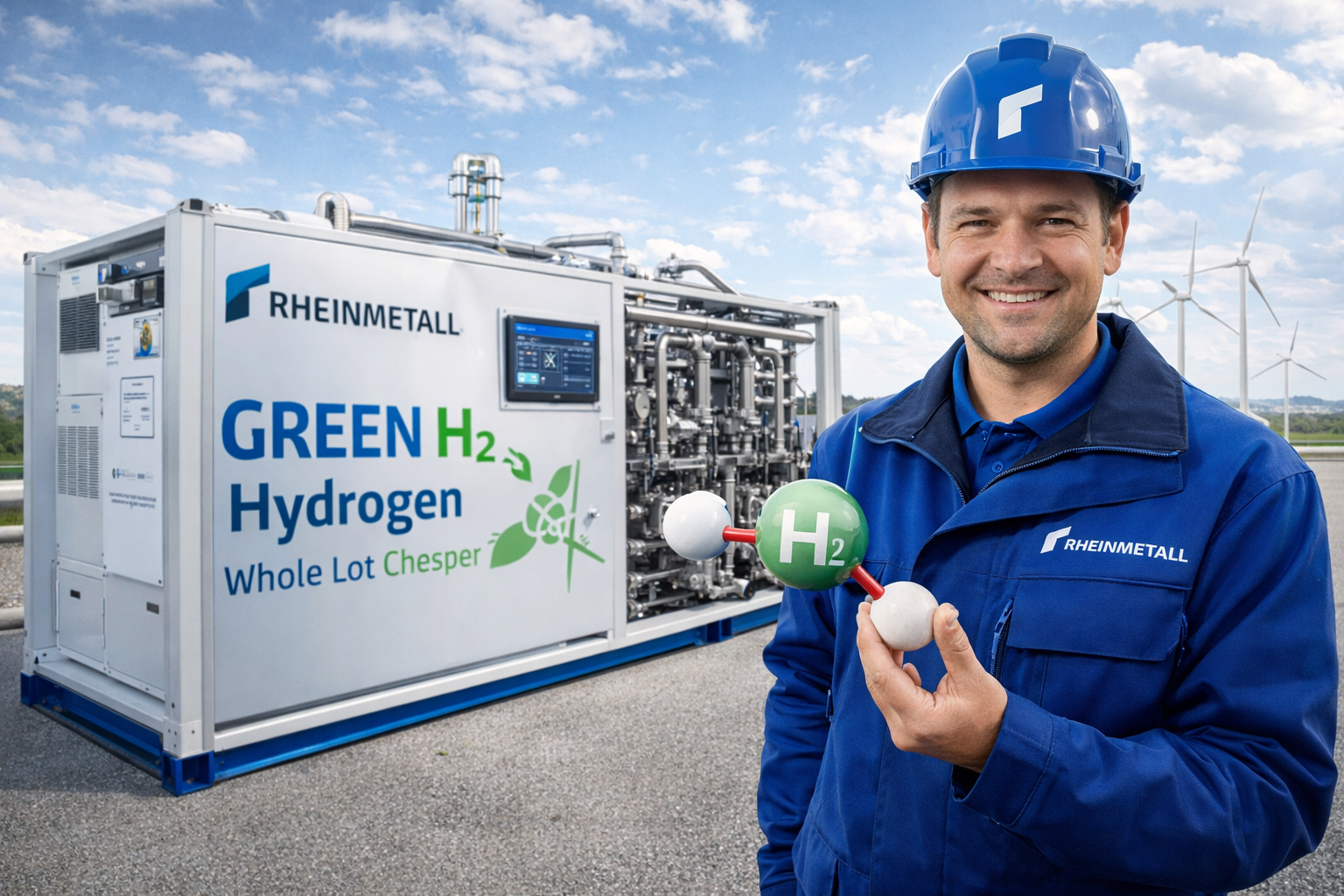
Rheinmetall, the German tech and defence conglomerate, has announced it has finished developing a new type of electrode that doesn’t require precious metals. This is significant because current systems heavily depend on platinum and similar materials, leading to exorbitant costs.
The three-year project wrapped up with results that beat expectations. This will reduce the production costs of green hydrogen by lowering investment in the overall system, accompanied by a doubling of power density or an efficiency improvement of over 10%. For an industry struggling to compete with cheap fossil fuels, those numbers are significant.
How They Got Here
KS Gleitlager GmbH, one of Rheinmetall’s subsidiaries, led the research. The German government backed the effort through a programme called E2ngel, part of the country’s push to become a hydrogen powerhouse.
They didn’t work alone. The German Aerospace Centre put various designs through rigorous testing. McPhy Energy Germany then verified everything would hold up in actual operating conditions. Both parties provided their approval.
Rheinmetall brought something unique to the table—decades of experience working with speciality alloys and metal coatings. That background helped them move fast. They completed what might have taken other teams years longer in just three months.
“The use of our innovative electrode technology will make electrolyser systems more powerful and efficient than they are today,” said Dr. Karsten Lange, who led the consortium project.
Already Gearing Up for Production
The company isn’t sitting on this. A pilot production line at their St. Leon-Rot facility should be running next year. They’ve sized it to handle electrode sheets measuring up to two metres, big enough for serious industrial applications.
Smart planning went into the manufacturing setup too. When orders ramp up, the production process can scale without major retooling.
Dr. Klaus Pucher, the executive overseeing this business unit, framed it in broader terms. Beyond the commercial opportunity, he sees it as a means of strengthening energy security across Germany and Europe. He envisions a reduction in reliance on imported oil and gas, and an increase in domestic production of clean fuel.
The Bigger Picture
Hydrogen advocates have been waiting for a moment like this. The fuel can do things batteries simply can’t—power ships, store seasonal energy, and run steel plants. But cost has been the stubborn obstacle blocking wider adoption.
Stripping out precious metals attacks that problem head-on. If Rheinmetall’s technology performs as advertised at scale, green hydrogen moves from a promising concept to a genuine competitor.
That’s not a small thing. It might just be the push the energy transition needs.
