

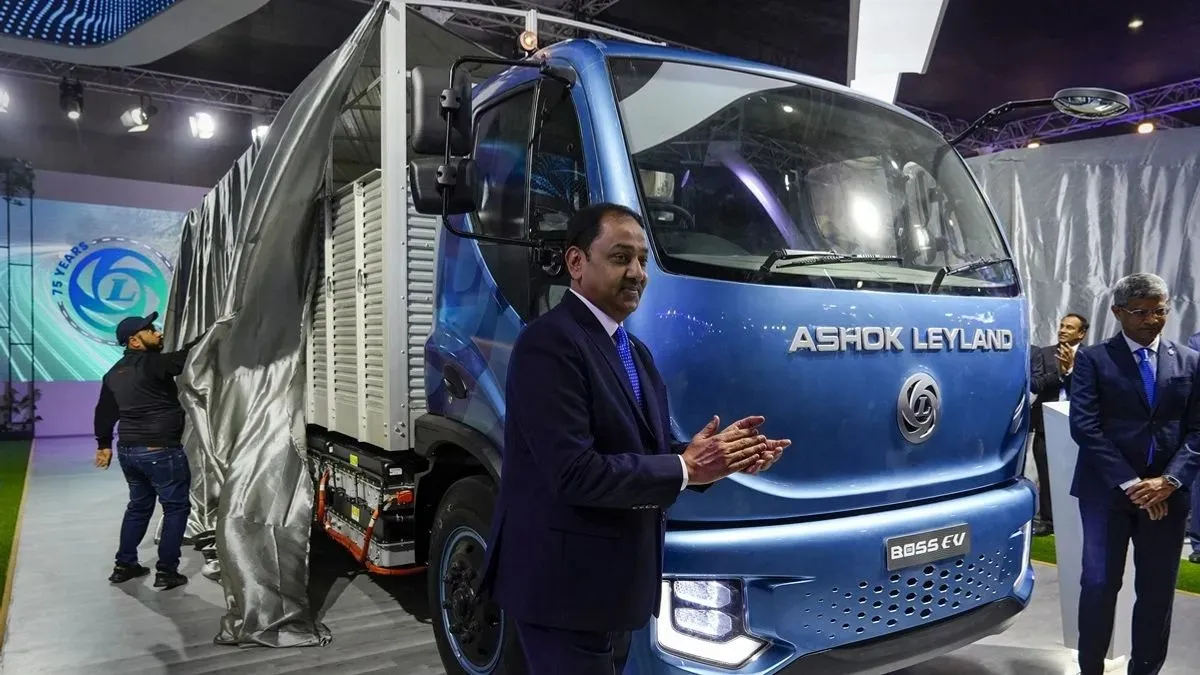
Uttar Pradesh on Friday marked a significant milestone in its clean mobility journey with the inauguration of Ashok Leyland’s dedicated electric vehicle (EV) manufacturing facility in Lucknow. Located at Sarojini Nagar Extension on Kanpur Road, the plant strengthens the state’s ambition to emerge as a key hub for electric and future-ready transportation in India.
The defence terminal was inaugurated by Defence Minister Rajnath Singh, who is the member of the parliament for the Lucknow constituency. The event was also attended by the Chief Minister of the state of UP, Yogi Adityanath, Union Minister of Road Transport and Highways Nitin Gadkari, and Minister of Heavy Industries H. D. Kumaraswamy.
A Strategic Boost to Uttar Pradesh’s Industrial Ecosystem
According to government officials, the EV manufacturing plant is a key addition to the growing industrial sector in Uttar Pradesh. The project is in line with the Uttar Pradesh state government’s strategy to encourage investments in the manufacturing sector, as well as its efforts to promote a shift towards a non-fossil fuel transport system.
The Lucknow facility is also likely to facilitate the adoption of electric public transportation and commercial mobility offerings within urban and semi-urban regions. Experts stated that this project would also help in curbing emissions from vehicles and further contribute to India’s sustainability objectives.
The state capital’s EV-only manufacturing facility set up by Ashok Leyland is attracting the attention of industry observers. The company, which is a leading player in the buses and commercial vehicles market, is expanding the scope of electric platforms amid the growing demand for clean mobility solutions in the Indian market.
Electric Buses and Last-Mile Mobility Solution Focus
According to company executives, the Lucknow-based facility would exclusively produce electric vehicles optimized for the Indian driving environment. The facility would concentrate on electric buses, small commercial vehicles, and last-mile mobility solutions catering to the rising requirement of transport networks in urban areas.
Industry experts see this as an indication that Ashok Leyland has faith in the future of electric mobility solutions, specifically for transportation and logistics services for the public. The new plant will be an addition to its manufacturing facilities.
Focus – Defence Manufacturing and Self-Reliance
While addressing a gathering, Defence Minister Rajnath Singh stated that the country is progressing steadily in becoming self-reliant in defence production. He added that the government has eased regulations and made policy changes that have increased investor confidence in sectors like heavy industries and defence production.
The Defence Minister pointed out that annual defence production, which was Rs 46,000 crore earlier, has been significantly upgraded. The Defence Minister referred to the steep growth in exports, which he was confident that it would exceed Rs 50,000 crore in 2029-30.
According to officials, the inauguration of the EV plant in Lucknow is a part of the region’s larger investment efforts, including the BrahMos manufacturing facility, which further underlines Lucknow’s emerging prominence in the industrial and manufacturing sector.
Employment Generation and Supply Chain Development
From a government point of view, one of the focal points of this project is job creation. The government is looking forward to this EV plant project creating direct and indirect jobs and even fostering a local supply chain for EV components and systems.
SMEs will also benefit from these investments, which will help establish a strong ecosystem for electric vehicles in and around Lucknow.
With the inauguration of the Ashok Leyland EV factory, Uttar Pradesh has made another attempt to place itself at the forefront of the Indian electric mobility shift.
