

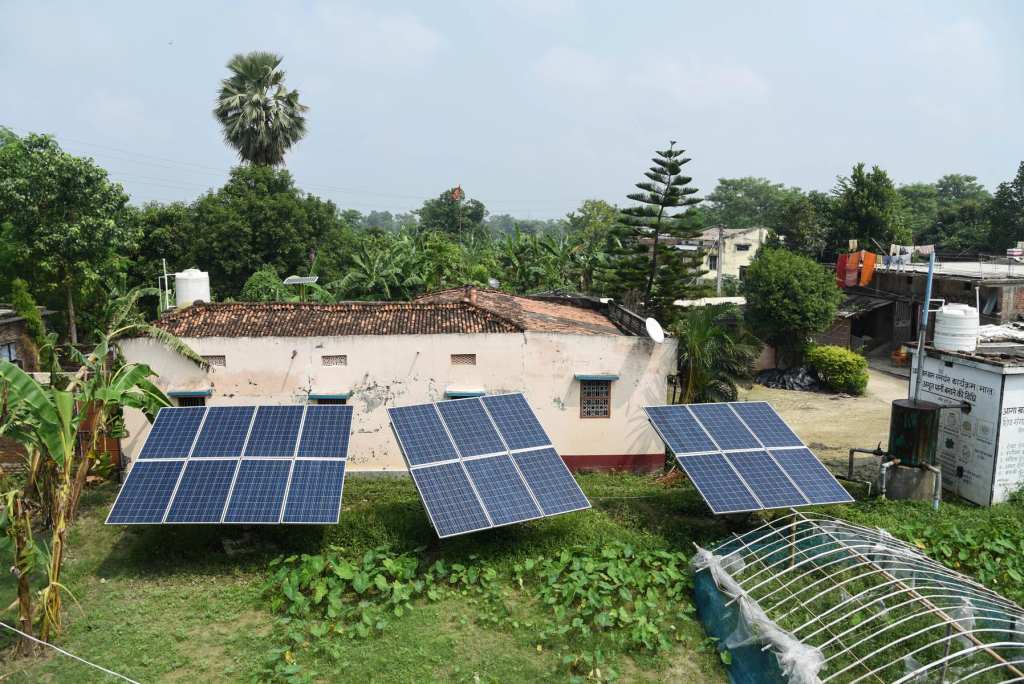
Chhattisgarh has emerged as a national frontrunner in combining social welfare with clean energy by launching India’s first integrated model of solar-powered housing for tribal families. Under a pilot initiative linked to the Pradhan Mantri Janman Awas Yojana (PMAY), the state government has begun providing newly constructed homes equipped with rooftop solar systems to vulnerable tribal households, marking a significant step toward inclusive and sustainable development.
The project focuses on the remote areas inhabited by tribes where adequate access to power has long been a concern. By integrating the housing projects with renewable energy projects, the project will ensure that the target population has not only housing but also access to power.
A New Model for Tribal Welfare
The pilot phase has been implemented in Gudurumuda village of Korba district, a remote area inhabited by members of the Pahadi Korwa community, categorised as a Particularly Vulnerable Tribal Group (PVTG). Under the project, eight newly built houses have been fitted with rooftop solar systems capable of meeting basic household electricity needs.
Each home has been provided with a 1 kilowatt solar installation, enabling families to power lights, fans and essential appliances without relying entirely on the conventional electricity grid. For communities accustomed to frequent outages and limited supply, the change is already proving transformative.
Cutting Power Bills, Improving Lives
In many cases, the cost of electricity would take a considerable chunk out of the income for many beneficiary households. This was because farmers and daily laborers earned sporadically. The use of solar power has made it negligible for many households to pay anything for power every month.
According to the authorities, this initiative also decreases reliance on polluting alternatives like kerosene lamps as it improves the environment. Reliable access to electricity has also improved the productive period, allowing children to read beyond sunset and the use of modern conveniences.
Policy Convergence with Long-Term Vision
One of the most notable aspects of the programme is the convergence of multiple government funding streams. Resources from housing schemes, rooftop solar programmes and local development funds have been combined to deliver a single, integrated solution. This approach has helped keep costs low while maximising benefits for end users.
Energy and policy experts believe this convergence model could be replicated across other tribal and rural regions where grid expansion remains costly or unreliable. By linking clean energy deployment directly to welfare schemes, states can accelerate energy access while advancing climate goals.
Supporting India’s Clean Energy Transition
The project is in line with India’s overall plan to adopt renewable energy and lower carbon emissions. Decentralized solar power infrastructure like rooftop solar panels have increasingly become recognized as last-mile solutions in forest and hilly areas.
In this regard, it must also be noted that the step taken by Chhattisgarh comes at a time when there are initiatives aimed at increasing renewable energy and extending power to households in remote areas. Solar power energy can thus ease the strain on other sources of power and improve power security.
A Blueprint for Inclusive Growth
In the situation when the shift towards an “eco-friendlier” energy paradigm speeds up in the Indian context, it becomes quite obvious in the Chhattisgarh pilot project just how seamlessly the concept of sustainability can be woven into the paradigm of sociocultural intervention. These solar homes are much more than an expression of technological development.
According to government officials, the pilot project is expected to set a framework for future expansion based on the pilot’s success. This is a big step towards a nationwide framework that sees housing, energy, and environmental sustainability all progressing at once.
