Close Menu
    Advertise With Us
    Facebook X (Twitter) Instagram
    Tuesday, February 10
    Advertise With Us
    Facebook X (Twitter) Instagram
    Greenisthefuture
    • Top Stories
    • Renewables
      • Solar Energy
      • Wind Enegry
    • Electric
      • 2 Wheeler
      • 4 Wheeler
      • Battery
      • Charger
      • Infrastructure
    • Clean Energy
    • Eco Innovator
    • Global
    • Interview
    Subscribe Now
    Greenisthefuture
    You are at:Home » Battery Tech Revolution 2026: LFP & NMC Breakthroughs, Fast-Charging, and India’s Integrated Plant
    Battery

    Battery Tech Revolution 2026: LFP & NMC Breakthroughs, Fast-Charging, and India’s Integrated Plant

    SINDHBAJ KUMARBy SINDHBAJ KUMARJanuary 8, 20263 Mins Read
    Share Facebook Twitter Pinterest LinkedIn Tumblr Email
    Reference Image
    Share
    Facebook Twitter LinkedIn Pinterest Email

    Global battery technology is undergoing a major transformation in 2026, with breakthroughs in LFP and NMC chemistries, integrated storage systems, and ultra-fast charging capabilities reshaping the electric vehicle (EV) and renewable energy landscape. India is also stepping up with its first integrated battery materials plant in Gujarat, signaling a new era of localized supply chains.

    In 2026, the battery technology in the world is experiencing a significant revolution as LFP and NMC chemistries, incorporated storage systems, and ultrafast charging systems are all transforming the electric vehicle (EV) and renewable energy sector. The first Integrated Battery Materials plant in Gujarat is also fast following in India, and this marks a new era of localized supply chains.

    The emergence of LFP and NMC chemistries

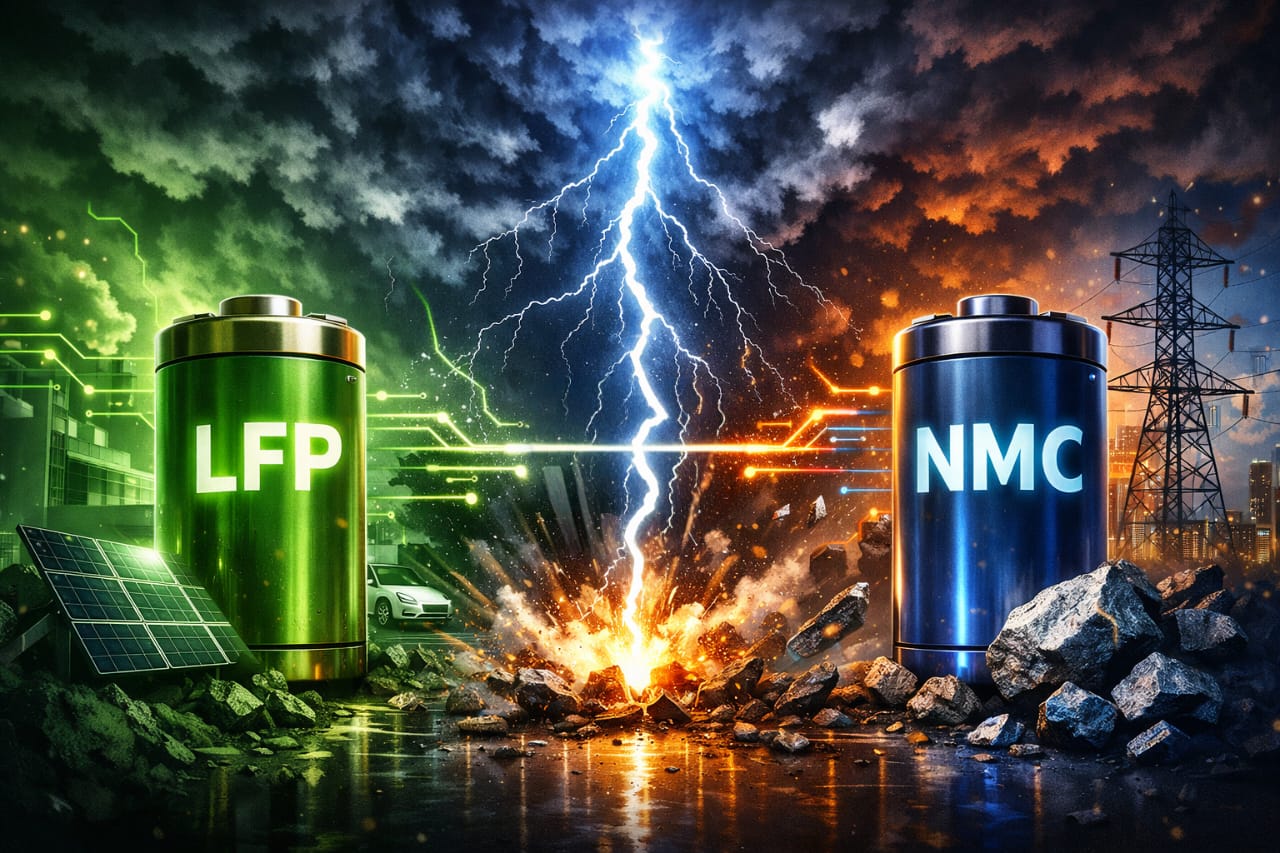
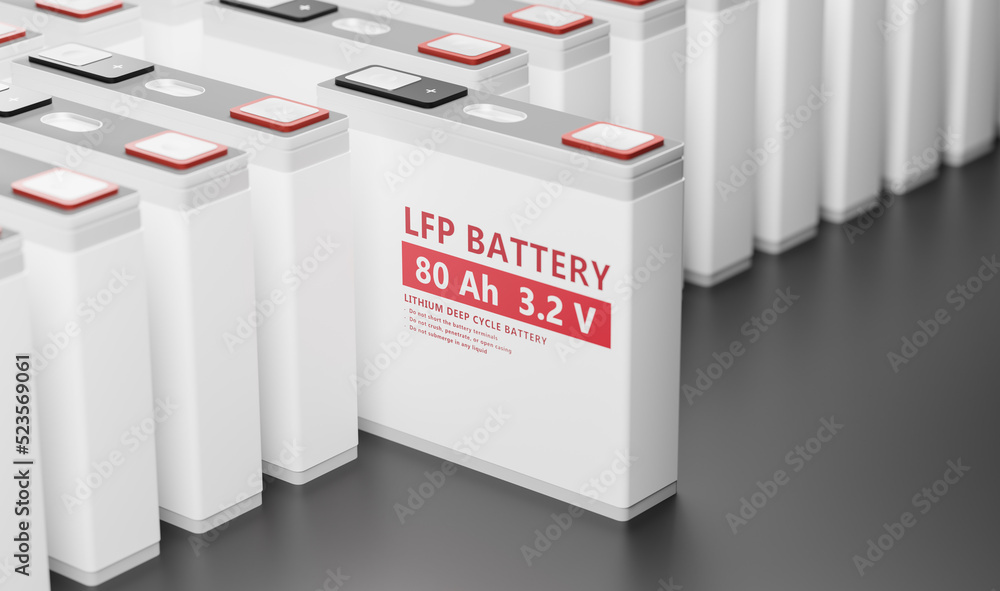
    Lithium Iron Phosphate (LFP) batteries, a battery that had previously been believed to charge slower than Nickel Manganese Cobalt (NMC), are also in their fifth generation. In recent times China has made innovations that have allowed super-fast charging, reducing performance disparity with NMC cells. As a case in point, the EV brand of Geely, Zeekr, has unveiled a 75 kWh LFP pack that can be charged within 105 minutes by 800 V technology between 10% and 80 percent.

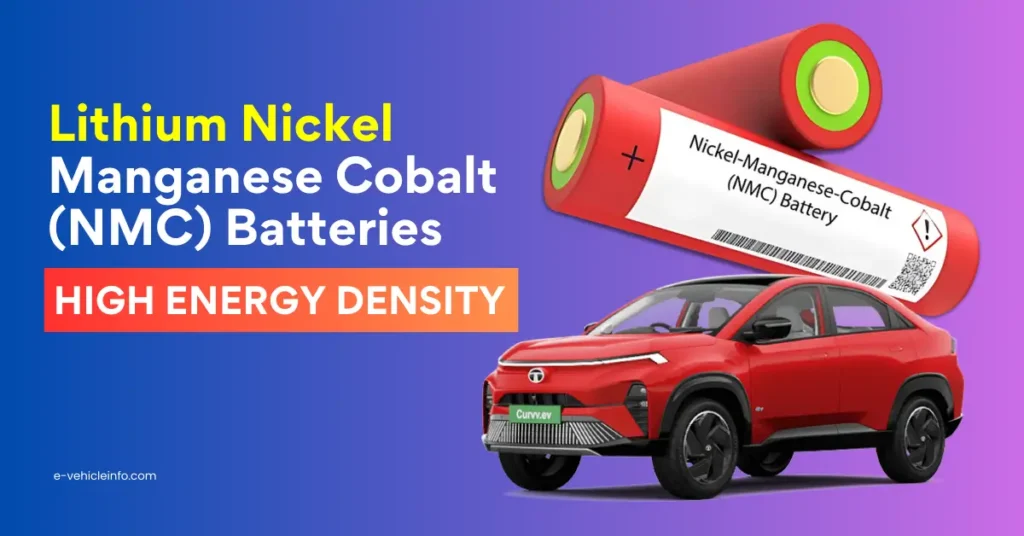
    In the meantime, NMC batteries are leading in the field of premium EVs with their increased energy density, which provides a longer range. Manufacturers are also moving towards a dual-chemistry approach, with LFP on low-end models and NMC on high-performance car models.

    Both storage solutions are integrated

    India is achieving a lot in the production of integrated batteries. The International Finance Corporation (IFC) pumped money into GFCL EV Products Limited, a subsidiary of Gujarat Fluorochemicals, in the amount of 50 million to construct the first all-purpose battery materials plant in the country. The plant will be placed in Jolva, Gujarat, and generate under the same roof electrolytes, LFP cathode materials, and PVDF/PTFE binders, which will eliminate the need to rely on imports and enhance the supply chain of EVs in India.

    The energy storage systems (ESS) are vital in the balance of the renewable energy grids, and these systems require such integrated plants. As India aims at achieving 500 GW of renewable capacity by 2030, advanced storage will be crucial towards balancing the supply and demand.

    Fast-Charging Revolution


    There is a new technology of fast charging that is a game-changer. The recent 5.5C LFP batteries that are ultra-fast charging enable EVs to be recharged in minutes, which addresses the issue of range anxiety among the consumers. With solid-state developments and 800 V architecture, charging time will be competitive with the refueling of the traditional systems.

    International car manufacturers are competing to install open high-speed charging points, and Indian companies are planning battery-replacement models to be used universally.

    Market Impact

    Experts forecast that LFP will take over entry-level EVs and storage at stationary locations, whereas NMC will be the option for premium cars. The two-track development guarantees low cost, safety, and performance in all segments.

    The Indian battery push alongside the global breakthroughs makes the country a major contributor to the EV revolution, as the country will no longer have to rely on imports, and the government initiative of Make in India is supported.

    Battery Battery Technology 2026 Clean Energy Technology Electric Vehicle Technology Energy Storage Systems EV EV Battery Innovation EV charging infrastructure EV Supply Chain India Fast Charging Batteries high-performance LFP battery India India Battery Manufacturing Integrated Battery Plant Gujarat LFP Batteries Lithium Battery India Make in India Batteries NMC Batteries NMC battery packs Renewable Energy Storage
    Share. Facebook Twitter Pinterest LinkedIn Tumblr Email
    Previous ArticleRenewables at a Crossroads: Clean Energy Gains Momentum in 2026
    Next Article Tata Sierra EV Launch 2026: Price, Range, and Key Features Revealed
    SINDHBAJ KUMAR

    Related Posts

    India Enhances International Connections to Increase Renewable Energy and Grid Storage

    February 3, 2026

    Budget 2026 prolongs EV Manufacturing industry

    February 2, 2026

    South Korean Giant GS E&C Enters India with First Solar Project in Maharashtra

    February 2, 2026
    Add A Comment
    Leave A Reply Cancel Reply

    Top Posts

    BCCI’s Green Pitch for Sustainable Cricket Future

    February 16, 2025

    Global Push for Sustainability Drives Green Ammonia Production

    March 18, 2025

    WPL 2025: Cricket Scores for Sustainability, Too!

    March 14, 2025

    Delhi EV Policy 2.0 Targets 95% Electric Vehicles by 2027

    March 11, 2025
    Don't Miss

    India Enhances International Connections to Increase Renewable Energy and Grid Storage

    By Aditya PandeyFebruary 3, 2026

    The Indian government is increasing its quest to forge international collaboration in renewable energy, green…

    Budget 2026 prolongs EV Manufacturing industry

    Caliber Interconnects Secures ARAI Certification, Boosting India’s EV Charging Infrastructure

    Mercedes-Benz Confirms CLA EV Launch in India for April 2026

    Newsletter

    Subscribe for Updates

    Get the latest updates from GreenIsTheFuture

    About Us

    Green technology can be used to reduce pollution and waste products of traditional industrial processes. In addition to reducing the negative effects on the natural environment, these technologies can also use resources more efficiently.
    Email Us: info@greenisthefuture.in

    Facebook X (Twitter) YouTube WhatsApp
    Quick Links
    • About Us
    • Our Team
    • Privacy Policy
    • Advertise With Us
    • Terms & Conditions
    • Subscription
    Newsletter

    Subscribe for Updates

    Get the latest updates from GreenIsTheFuture

    © 2026 Designed by GreenIsTheFuture.

    Type above and press Enter to search. Press Esc to cancel.