

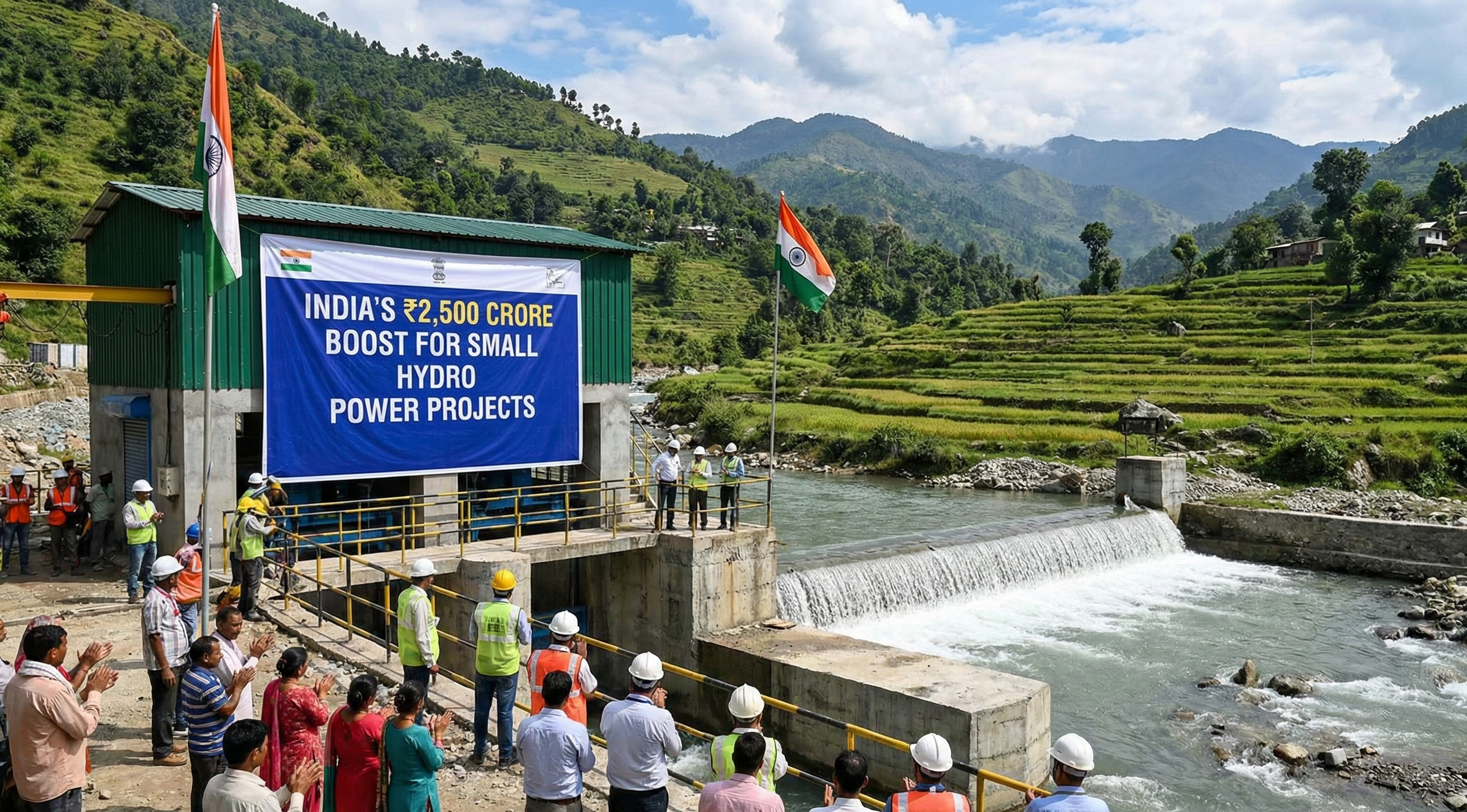
The Indian government aims to double installed capacity to 10 GW over the next decade with this fresh funding push The government has recently provided a significant boost to small hydropower. The finance ministry’s expenditure finance committee has cleared a proposal worth around ₹2,500 crore to support small hydro projects across the country.
The plan is straightforward. Developers building hydroelectric projects up to 25 MW can now get central financial assistance covering 20–30% of benchmark costs. The power regulator sets these costs, and the support should alleviate some pressure on project economics.
Currently, India has just over 5 GW of operational small hydro capacity. The government wants to push that to 10 GW within ten years. That’s ambitious, but the funding could help get there.
Significance
These aren’t your massive dam projects that flood valleys and displace villages. Most small hydro setups are either canal-based or run-of-river systems. They work with natural water flows, eliminating the need for large reservoirs.
The advantages stack up quickly. Less land is needed. The government says it has a longer operational life. The benefits of local irrigation are significant. These projects also create jobs for nearby communities. Compared with large hydro installations, these projects have a significantly smaller environmental footprint.
There’s also the grid angle. These projects sit closer to where power gets consumed, usually at the tail end of transmission networks. That means the generated electricity is absorbed locally, reducing transmission losses.
What Happens Next
With the committee’s green light, the Ministry of New and Renewable Energy will now draft a cabinet note for final approval. MNRE handles policy and implementation for this segment.
The cost economics are fairly predictable. Building a small hydro project typically runs between ₹10-12 crore per megawatt.
But there’s a catch. These projects are capital-intensive upfront. Industry executives have been pushing for phased payments tied to project milestones during construction. That would help developers manage cash flow more effectively as they build out capacity.
The timing makes sense. India is actively diversifying its energy mix away from fossil fuels. Small hydro offers reliable, clean power with operational flexibility—these plants can ramp up quickly and provide spinning reserves when the grid needs them.
